
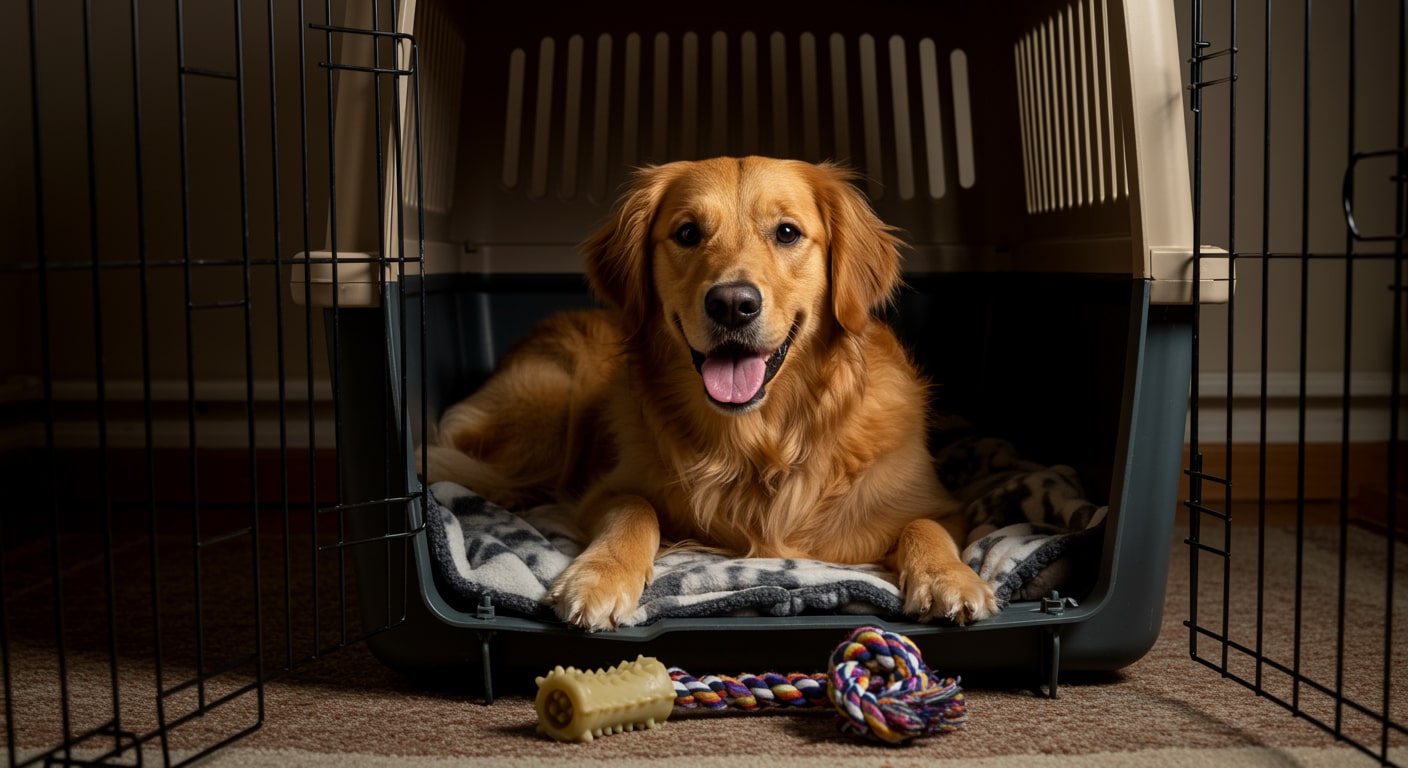
Combining crate training with separation anxiety presents one of the most challenging scenarios dog owners face. When your dog experiences panic at being left alone AND distress from crate confinement, the question "can you even do crate training for separation anxiety?" becomes urgent and critical. Understanding how to crate train an older dog with separation anxiety, managing dog whining in crate due to separation anxiety, and implementing proper protocols can make the difference between success and making anxiety worse.
This comprehensive guide addresses whether crate training separation anxiety is advisable, when it helps versus harms, and how to implement it safely when appropriate. You'll learn complete protocols for various scenarios, understand what dog whining in crate separation anxiety means, and discover alternatives when crate training isn't the right solution. This article builds on our guides about working with a dog behaviorist for separation anxiety and our detailed resource on managing dog kennel anxiety.
Can You Crate Train a Dog with Separation Anxiety?
The answer to whether crate training separation anxiety is possible depends entirely on your individual dog, the severity of their anxiety, and how you implement the training.
When Crate Training Can Help
For some dogs with mild separation anxiety, properly introduced crates can actually provide comfort and security. The confined space creates a den-like environment that some anxious dogs find calming. Crates provide clear boundaries reducing decision-making stress for anxious dogs who feel overwhelmed by too much space. They prevent destructive behaviors keeping dogs safe from ingesting dangerous items or injuring themselves on household objects. Some dogs genuinely prefer enclosed spaces when anxious, seeking out small areas like closets or under beds. For these dogs, a crate simply formalizes their natural preference.
When Crate Training Makes Things Worse
Conversely, for dogs with moderate to severe separation anxiety or existing crate trauma, forcing crate confinement can dramatically escalate panic. Signs that crate training is harmful include frantic escape attempts causing injury, continuous panic-level distress lasting 30+ minutes, complete refusal to enter the crate even with high-value rewards, regression in overall anxiety levels after crate introduction, and stress-related elimination or self-harm behaviors. In these cases, crate training doesn't help separation anxiety—it adds an additional layer of distress.
The Critical Assessment
Before attempting crate training with a separation-anxious dog, honestly assess your dog's baseline stress level with both separation AND confinement separately, past experiences with crates or confinement, severity of separation anxiety symptoms, and your ability to implement extremely gradual protocols requiring weeks or months. If your dog shows severe distress with either separation or confinement individually, combining both simultaneously may be too overwhelming. Consider addressing one issue at a time or exploring alternative management strategies.
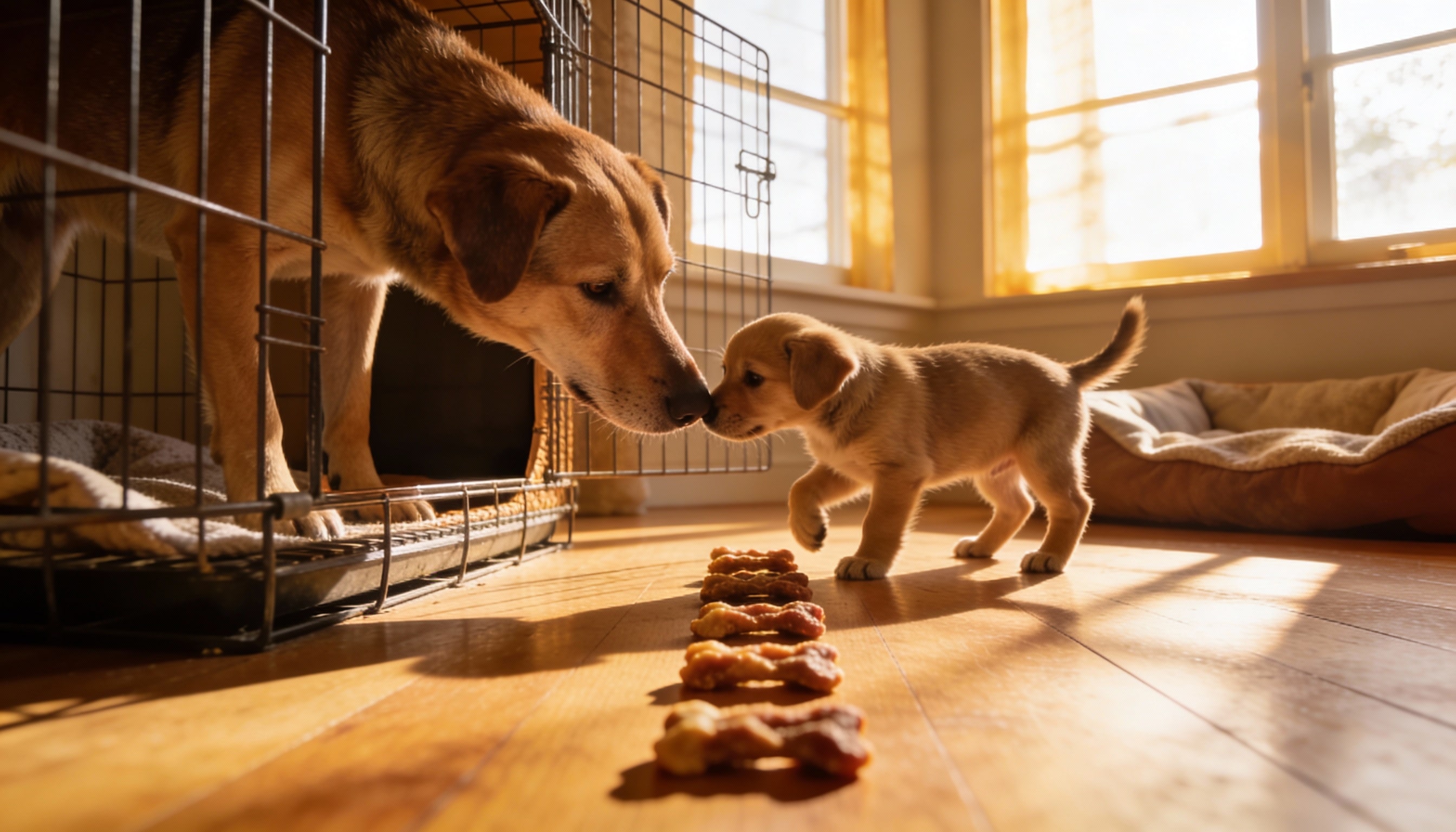
Understanding the Connection Between Crates and Anxiety
Comprehending how crates interact with anxiety helps you make informed decisions and implement appropriate protocols.
How Confinement Affects Anxious Dogs
Physical restriction can amplify anxiety in several ways. Confined dogs cannot engage in anxiety-coping behaviors like pacing, seeking comfort items, or accessing preferred hiding spots. The inability to escape creates learned helplessness in some dogs—the feeling that nothing they do matters, intensifying panic. Confinement eliminates control and choice, both of which help reduce anxiety. For dogs whose anxiety manifests through movement and activity, forced stillness in a crate can be unbearable.
The Den Instinct Myth
Many crate training advocates cite "den instinct" suggesting dogs naturally love small enclosed spaces. While dogs do seek safe resting areas, this doesn't mean all dogs want to be locked in small containers, especially when already anxious. Wild canids use dens primarily for raising puppies, not adult resting. Adult dogs choose a variety of resting locations based on temperature, safety, and preference. The den instinct is real but often oversimplified—it doesn't override panic or make confinement universally comforting.
Positive vs. Negative Crate Associations
The difference between a crate being helpful or harmful for an anxious dog often comes down to associations. Dogs with positive crate associations view crates as safe, comfortable spaces connected to good things like treats, meals, and rest. Dogs with negative associations see crates as traps, punishment, or predictors of abandonment. Building or rebuilding positive associations requires extensive time and patience but is absolutely essential for crate training separation anxiety successfully.
When Crate Training Helps vs Hurts Separation Anxiety
Understanding specific scenarios where crate training is beneficial versus harmful prevents making anxiety worse.
Helpful Scenarios
Crate training can be beneficial when your dog shows mild separation anxiety with brief distress that resolves within 10-15 minutes, your dog already has neutral or positive crate associations from previous training, destructive behavior during separation puts your dog at risk of injury, your dog naturally seeks enclosed spaces when stressed, and you can implement extremely gradual training without rushing. In these situations, the crate might provide structure and safety that actually reduces anxiety.
Harmful Scenarios
Avoid crate training or proceed with extreme caution when your dog displays severe separation anxiety with panic-level distress, previous traumatic crate experiences exist, your dog injures themselves attempting to escape confinement, aggressive reactions occur when approaching the crate, or your dog shows severe stress responses including excessive drooling, vomiting, or elimination. Forcing crate training in these scenarios can create lasting trauma requiring extensive rehabilitation.
The Gray Area: Moderate Cases
Many dogs fall into a middle ground where crate training might work with exceptional patience and proper implementation. These cases require professional guidance from a certified veterinary behaviorist or separation anxiety specialist. They may benefit from medication reducing anxiety enough for training to be feasible. Success requires months of gradual work, not weeks. If you're in this gray area, don't attempt crate training alone—professional support significantly increases success likelihood while reducing risks of worsening anxiety.
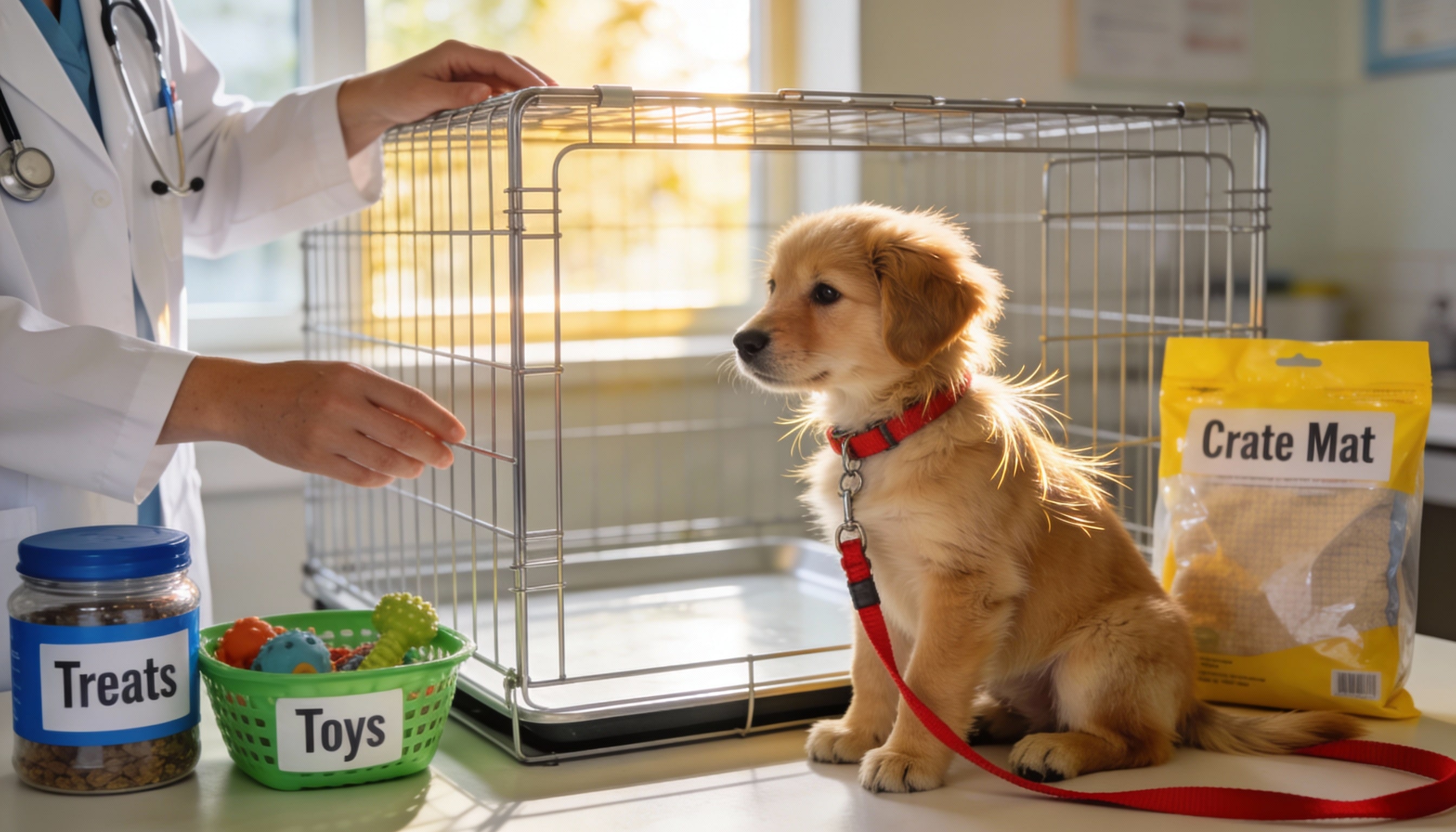
Complete Crate Training Separation Anxiety Protocol
If assessment indicates crate training is appropriate for your dog, this protocol provides a systematic approach combining separation anxiety management with crate introduction.
Phase 1: Building Crate Positivity (2-4 Weeks)
Before any confinement or separation training, create purely positive crate associations. Leave the crate door permanently open making it just another piece of furniture. Toss high-value treats randomly into the crate throughout the day, 5-10 times daily. Feed all meals inside the crate with the door open. Play games where your dog voluntarily enters to retrieve toys then exits freely. Place favorite bedding, toys, or items with your scent inside. Never force entry, close the door, or use the crate for any negative purpose. Goal: Your dog willingly enters and exits the crate multiple times daily, viewing it as a positive space.
Phase 2: Brief Door Closure Without Separation (2-4 Weeks)
Once your dog reliably enters the crate voluntarily, begin extremely brief door closures while you remain immediately present and visible. Close the door for literally 1-2 seconds, immediately open, reward heavily. Gradually increase: 3 seconds, 5 seconds, 10 seconds, 30 seconds. Only progress to longer durations when your dog shows zero anxiety at the current duration. If any stress appears, you've progressed too quickly—return to previous successful duration. Practice 5-10 repetitions per session, 3-4 sessions daily. Goal: Your dog can remain calm with closed door for 5-10 minutes while you're sitting right next to the crate.
Phase 3: Adding Distance Without Separation (2-3 Weeks)
With the door closed and your dog calm, step back one foot while remaining visible. Return immediately, reward, repeat. Gradually increase distance: 2 feet, 5 feet, across the room. Move around the room while your dog is crated—sit, stand, walk. Eventually step just outside the door frame while remaining visible. Each progression should be so gradual your dog barely notices. Build to leaving your dog's sight for 5 seconds, then 10 seconds, then 30 seconds. Always return before anxiety appears. Goal: Your dog remains calm with you out of sight for 2-3 minutes.
Phase 4: Brief Separations (3-6 Weeks)
Now combine crate training with actual separation. Start with absurdly short true departures—step outside for 10 seconds, return, reward calm behavior. Build gradually: 20 seconds, 30 seconds, 1 minute, 2 minutes. Vary durations so your dog doesn't predict exact lengths. Practice mock departures—go through your entire leaving routine including picking up keys, putting on shoes, grabbing bags, then return without actually leaving. This desensitizes departure cues. Eventually practice actual brief departures—go to your car for 1 minute, run to the mailbox, take out trash. Very gradually extend duration over weeks. Goal: Your dog handles typical departure durations calmly.
Throughout All Phases: Critical Principles
Never let your dog out while displaying anxiety—this reinforces that panic works. Always return before panic builds—success comes from hundreds of sub-threshold exposures. Ensure adequate exercise before each session reducing baseline anxiety. Provide special crate-only toys like frozen Kongs appearing only during crate time. Use calming aids including pheromone diffusers, white noise, or anxiety wraps. Practice at various times daily, not just before actual departures. Document progress tracking successful durations and any setbacks. Be patient—this process takes months, not weeks.
How to Crate Train an Older Dog with Separation Anxiety
Learning how to crate train an older dog with separation anxiety requires acknowledging unique challenges that adult dogs, especially those with established anxiety patterns, face.
Challenges Specific to Older Dogs
Older dogs have longer histories of anxiety potentially spanning years, making patterns more entrenched. They may have accumulated negative crate experiences from shelters, previous homes, or boarding facilities. Senior dogs often have medical issues like arthritis making certain positions uncomfortable, or cognitive dysfunction causing confusion. Older dogs typically take longer to learn new behaviors than puppies—neuroplasticity decreases with age. These challenges don't make success impossible, but they require adjusted expectations and extra patience.
Modified Introduction Protocol
For older dogs with separation anxiety, extend each training phase even longer than standard protocols. Spend 4-6 weeks on purely positive associations before any door closure. Keep individual training sessions very short—5 minutes maximum—preventing frustration in older dogs with shorter attention spans. Use extremely high-value rewards recognizing that anxious older dogs need stronger motivation. Ensure the crate setup is comfortable for aging bodies—orthopedic bedding, easy entry without high thresholds, and appropriate temperature control. Never rush—older dogs deserve patience and respect for their life experiences.
Addressing Medical Factors
Ensure thorough veterinary examination before crate training an older dog. Rule out pain, cognitive dysfunction, urinary or bowel control issues, and other conditions affecting comfort and behavior. Discuss anti-anxiety medication with your veterinarian—older dogs with severe, long-standing anxiety may benefit from pharmaceutical support making training feasible. Adjust crate time expectations based on medical limitations—an older dog with bladder issues cannot hold elimination as long as a healthy young adult.
Alternative Considerations
Honestly assess whether crate training is truly necessary for your older dog. Many senior dogs live comfortably with alternative management including puppy-proofed rooms, exercise pens, or house freedom for trustworthy dogs. If your older dog shows severe distress despite proper, patient training, their comfort and quality of life matter more than achieving crate training success. Don't sacrifice an older dog's wellbeing for a training goal that may simply not be appropriate for their individual needs.
Dog Whining in Crate Separation Anxiety: What It Means
Understanding dog whining in crate with separation anxiety helps you respond appropriately rather than accidentally reinforcing anxiety.
Types of Whining
Not all whining indicates the same thing. Attention-seeking whining is typically intermittent, variable in intensity, and stops if ignored consistently. The dog may pause to see if you respond, then resume if you don't. Anxiety-driven whining is continuous, escalating in intensity, often accompanied by other stress signals like pacing, panting, or destructive behavior. It doesn't stop with ignoring and may progress to panic. Need-based whining indicates legitimate physical needs—bathroom urgency, pain, or discomfort. This type is usually distinct from the dog's normal whining patterns.
Distinguishing Between Types
Use a pet camera to observe your dog's behavior during whining. Attention-seeking dogs typically look toward where you went, whine briefly, then settle or engage with toys. Anxious dogs show continuous stress behaviors—pacing, whining, drooling, escape attempts—without breaks. Dogs with physical needs may show specific behaviors like circling (need to eliminate), licking specific body areas (pain), or pawing at bedding (discomfort). The context matters—whining that starts immediately upon crating versus 5 minutes later, whining that occurs only when you leave versus when you're home, and patterns related to feeding or bathroom schedules all provide clues.
Responding Appropriately
For attention-seeking whining, never respond during whining—this reinforces the behavior. Wait for even brief pauses in whining, then immediately reward quiet behavior. For anxiety-driven whining, you've pushed too hard too fast. Return to shorter durations your dog handles calmly. Don't force your dog to "tough it out"—this worsens anxiety rather than teaching coping. For need-based whining, address the underlying need. Take your dog out for bathroom breaks, check for comfort issues, or consult your veterinarian about pain. Never ignore persistent whining without investigating the cause.
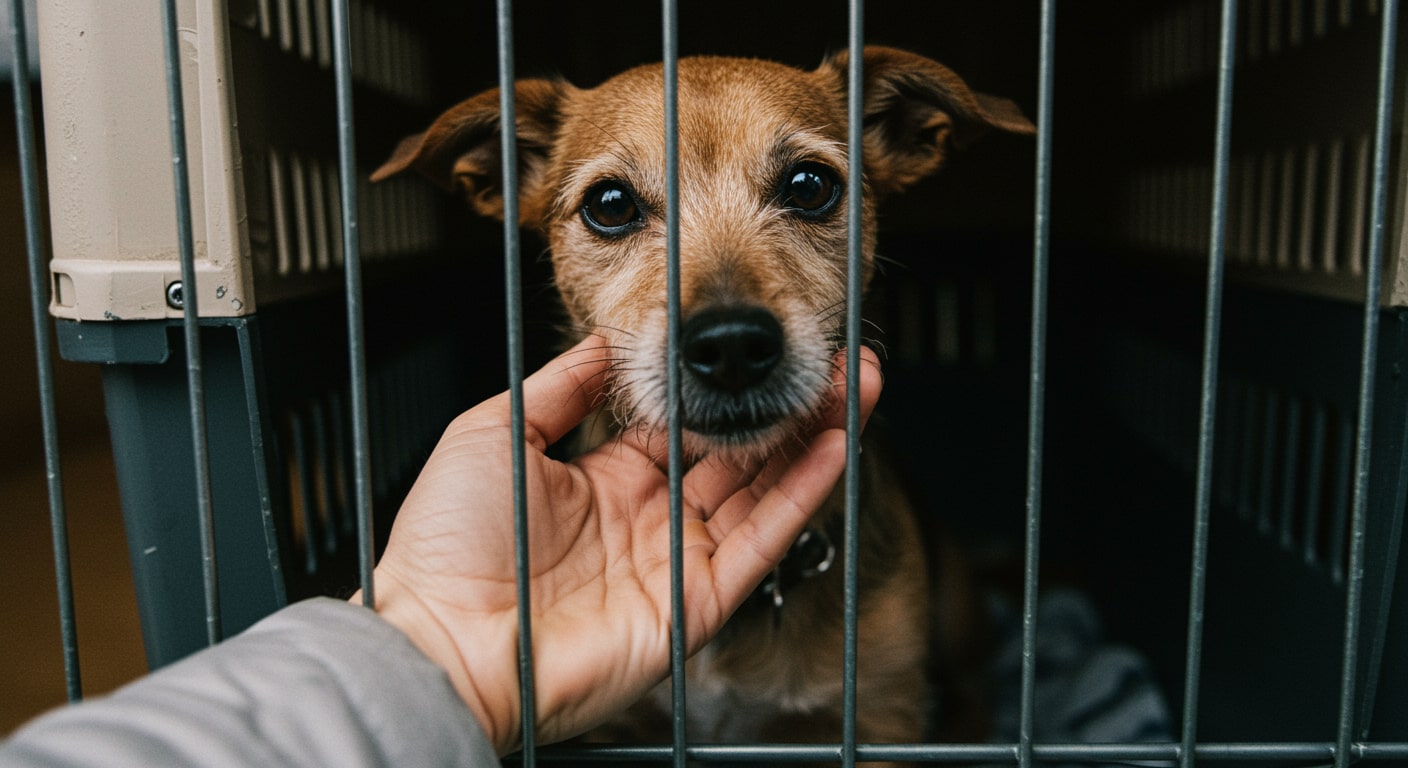
Gradual Desensitization Steps
Systematic desensitization is the cornerstone of successfully combining crate training with separation anxiety management.
Understanding Threshold
Threshold is the point at which your dog's anxiety is triggered. Effective desensitization occurs only when you stay below threshold—exposing your dog to triggers at intensities so low that anxiety doesn't activate. Every exposure above threshold strengthens anxiety rather than reducing it. This means training must proceed at what feels frustratingly slow pace—but this patience prevents setbacks and creates lasting results.
Breaking Down Triggers
Identify all components triggering anxiety and address each separately before combining. Crate door closure is one trigger. Your movement away from the crate is another. Departure cues like picking up keys are separate triggers. Your actual departure is yet another. Work on each independently building comfort before adding complexity. For example, practice door closure extensively before adding any distance. Build distance before adding departure cues. Add departure cues before any actual departures. This methodical approach prevents overwhelming your dog.
The 3-Second Rule
If your dog shows any stress signs—stiffening, whale eye, lip licking, yawning, whining—within 3 seconds of a new step, that step was too difficult. Immediately return to the previous successful level. Your dog is communicating they're not ready. Respect this communication rather than pushing through it. Gradual desensitization requires hundreds or thousands of successful repetitions below threshold, not forcing through discomfort.
Variable Reinforcement Schedule
Initially, reward every single successful repetition building strong positive associations. After several weeks of consistency, begin variable reinforcement—reward 80% of successes, then 70%, then 50%. This variable schedule actually strengthens behavior making it more resistant to extinction. Even fully trained dogs should occasionally receive rewards for calm crate behavior maintaining positive associations long-term.
Making the Crate a Safe Space
Environmental setup significantly impacts whether your anxious dog can learn to view the crate positively.
Optimal Crate Selection
Choose the right crate type for your anxious dog. Wire crates offer maximum visibility and airflow but may feel less secure. Plastic airline crates provide more enclosure potentially comforting anxious dogs but less ventilation. Soft-sided crates work only for non-destructive dogs. Heavy-duty crates are essential for dogs with escape attempt histories. Size matters—large enough to stand, turn, and lie comfortably but not so large it doesn't feel secure. Consider purchasing both wire and plastic crates to determine your dog's preference.
Interior Comfort
Add comfortable orthopedic bedding appropriate for your dog's size and age. Include items with your scent—worn t-shirts or blankets—providing comfort through familiar smell. Provide special toys that only appear during crate time making confinement predict good things. Use lick mats with frozen spreadable treats offering extended engagement. Ensure appropriate temperature—not too hot or cold—through crate location and bedding choices. For anxious dogs, comfort is essential, not luxury.
Environmental Factors
Place the crate in an optimal location—quiet enough to reduce triggering stimuli but not so isolated your dog feels abandoned. Many anxious dogs do better with crates in bedrooms or main living areas rather than basements or separate rooms. Use partial covers creating den-like atmosphere without complete darkness which might increase fear. Add white noise machines or calming music masking unpredictable environmental sounds that trigger anxiety. Use pheromone diffusers near the crate releasing calming dog pheromones. Maintain consistent lighting—some anxious dogs do better with soft night lights than complete darkness.
Common Mistakes to Avoid
Certain approaches seem logical but actually undermine crate training for dogs with separation anxiety.
Forcing or Rushing the Process
The biggest mistake is progressing too quickly. Anxiety-prone dogs need slower timelines than confident dogs. Rushing creates setbacks requiring you to start over, ultimately taking longer than patient progression would have. Never physically force your anxious dog into the crate—this creates traumatic associations potentially undoing months of work. If your dog won't enter voluntarily, you haven't built sufficient positive associations yet.
Using the Crate for Punishment
Never use the crate for timeout or punishment. Anxious dogs need the crate to predict only positive or neutral experiences. Single instances of crate punishment can destroy weeks of careful positive association building. If you need to interrupt unwanted behavior, use other management techniques—never crating as a consequence for misbehavior.
Letting Your Dog Out During Anxiety
Opening the crate door while your dog is displaying anxiety—barking, whining, pawing—teaches them that panic works. This is incredibly difficult advice to follow when your dog is distressed, but following through is essential. The solution isn't letting them out—it's not putting them in situations that trigger anxiety in the first place. If anxiety occurs, you've pushed too hard. Return to shorter durations, then very gradually rebuild.
Inconsistency Across Family Members
Everyone in the household must follow identical protocols. If one person lets the dog out during whining while another waits for quiet, you create confusion and intermittent reinforcement—the strongest reinforcement schedule for maintaining unwanted behaviors. Hold a family meeting establishing clear rules everyone commits to following.
Alternative Confinement Options
Not every dog with separation anxiety is suitable for crate training. Knowing alternatives prevents unnecessary suffering.
Exercise Pens
Exercise pens provide more space than crates while maintaining boundaries. Many anxious dogs tolerate larger contained areas better than small crates. Pens allow room for movement, multiple toys, water access, and even potty pads for emergencies. They're particularly useful for puppies or dogs with incomplete housetraining combined with anxiety. Gradually reduce pen size over time if the eventual goal is crate training.
Puppy-Proofed Rooms
Designating a safe room—laundry room, bathroom, or spare bedroom—provides the most space while preventing access to dangerous items. Remove anything your dog might destroy or that could harm them. Add comfortable bedding, toys, water, and potentially potty pads. This works well for dogs who cannot handle any confinement smaller than room-sized. Use baby gates allowing visual access to other areas reducing isolation feelings.
Gradual House Freedom
For trustworthy dogs without destructive tendencies, house freedom is often the best option. Start with freedom in one room, gradually expanding access as reliability improves. Use pet cameras monitoring behavior when you're gone. This works particularly well for dogs whose anxiety specifically relates to confinement rather than separation itself. If your dog is calm and non-destructive when given house freedom, this may be more appropriate than forcing crate acceptance.
Professional Day Care or Pet Sitters
Some dogs simply cannot handle alone time regardless of confinement type. Professional doggy daycare eliminates alone time entirely during work hours. Pet sitters staying in your home provide company. Dog walkers breaking up long alone periods reduce anxiety triggers. While these solutions cost money, they may be more humane and effective than forcing a severely anxious dog into situations they cannot handle.
When to Seek Professional Help
Certain scenarios require professional expertise beyond what this article can provide.
Indicators You Need Expert Guidance
Seek professional help if your dog injures themselves attempting to escape the crate, shows severe panic responses lasting longer than 15-20 minutes, develops aggressive behaviors related to crating, experiences no improvement after 2-3 months of proper protocols, or has regression in overall behavior or anxiety levels. These signs indicate complexity requiring customized professional intervention.
Types of Professionals
For severe cases, certified veterinary behaviorists (DACVB) can prescribe anti-anxiety medication often necessary for progress. Certified separation anxiety trainers (CSAT) specialize specifically in separation anxiety protocols. Certified professional dog trainers (CPDT-KA) with anxiety specialization provide structured training programs. For comprehensive guidance on finding qualified professionals, see our article on working with a dog behaviorist for separation anxiety.
The Role of Medication
For dogs with severe anxiety, medication can be essential for making training feasible. Anti-anxiety medication doesn't cure separation anxiety or eliminate the need for behavior modification, but it reduces anxiety enough that your dog can learn. Common medications include SSRIs like fluoxetine for long-term management, situational medications like trazodone or gabapentin for specific events, and natural supplements for mild cases. Always work with a veterinarian—never give human medications or adjust dosages without professional guidance.
Success Stories and Timelines
Understanding realistic timelines and success criteria helps maintain motivation during the long training process.
What Success Looks Like
Success doesn't mean your dog loves the crate or never shows any stress. Success means your dog can enter the crate without force, remains calm during typical separation durations, shows reduced stress signals over time, doesn't injure themselves or destroy property, and maintains reasonable quality of life despite separation. Some dogs reach enthusiastic crate acceptance. Others reach tolerance—not excited but not distressed. Both are successes.
Realistic Timelines
For dogs with mild separation anxiety and no crate trauma, seeing significant improvement might take 2-3 months of consistent work. For moderate cases or dogs with crate history complications, expect 4-6 months. For severe cases, especially older dogs with years of established anxiety patterns, 6-12 months or longer is realistic. Progress is rarely linear—expect good days and setbacks. Patience and consistency are essential. Rushing virtually guarantees failure and worsening anxiety.
Maintaining Progress
Once you achieve success, maintain gains through continued practice. Occasionally crate your dog even when not necessary preventing skill decay. Continue providing special crate toys and occasional rewards maintaining positive associations. Monitor for regression during stressful periods—moves, schedule changes, new family members—and increase support temporarily. For more information on related crate challenges, see our guide on dogs who bark in their crate when left alone.
Conclusion: Balancing Safety and Wellbeing
Crate training separation anxiety is possible for some dogs but not all. Understanding when it's appropriate, how to implement it safely through extremely gradual protocols, and when to consider alternatives prevents making anxiety worse while keeping your dog safe. Whether you're learning how to crate train an older dog with separation anxiety or managing dog whining in crate due to separation anxiety, success requires honest assessment, exceptional patience, and willingness to adjust based on your individual dog's responses.
Remember that the goal isn't achieving crate training at any cost—it's managing separation anxiety while maintaining your dog's wellbeing and quality of life. Sometimes this means successful crate training. Sometimes it means finding alternative management strategies. Both approaches are valid when chosen based on your dog's individual needs rather than rigid expectations.
For comprehensive support, consider working with a certified dog behaviorist specializing in separation anxiety who can provide personalized assessment and protocols. If crate-specific anxiety is the primary challenge rather than general separation anxiety, our detailed guide on dog kennel anxiety provides additional strategies.
Ready to help your anxious dog? Start today by honestly assessing whether crate training is appropriate for your individual dog's anxiety level and history. If proceeding, begin with purely positive associations spending 2-4 weeks simply making the crate a place where good things happen before any confinement. With patience, consistency, and respect for your dog's individual needs, you can help even anxious dogs develop comfortable relationships with their crates—or find alternative solutions that work better for their unique situations.
Key Takeaways
- Crate training can help or harm depending on individual dog factors and anxiety severity
- Never rush the process—successful protocols take months, not weeks, for anxious dogs
- Stay below anxiety threshold at all times—forcing through distress worsens problems
- Dog whining in crate may indicate attention-seeking, anxiety, or physical needs—respond appropriately
- Older dogs with separation anxiety need extra patience and modified protocols
- Alternative confinement options may be more appropriate than crates for some dogs
- Professional help is essential for severe cases or when DIY efforts aren't showing progress
- Success means calm tolerance, not necessarily enthusiasm—both are valid outcomes