
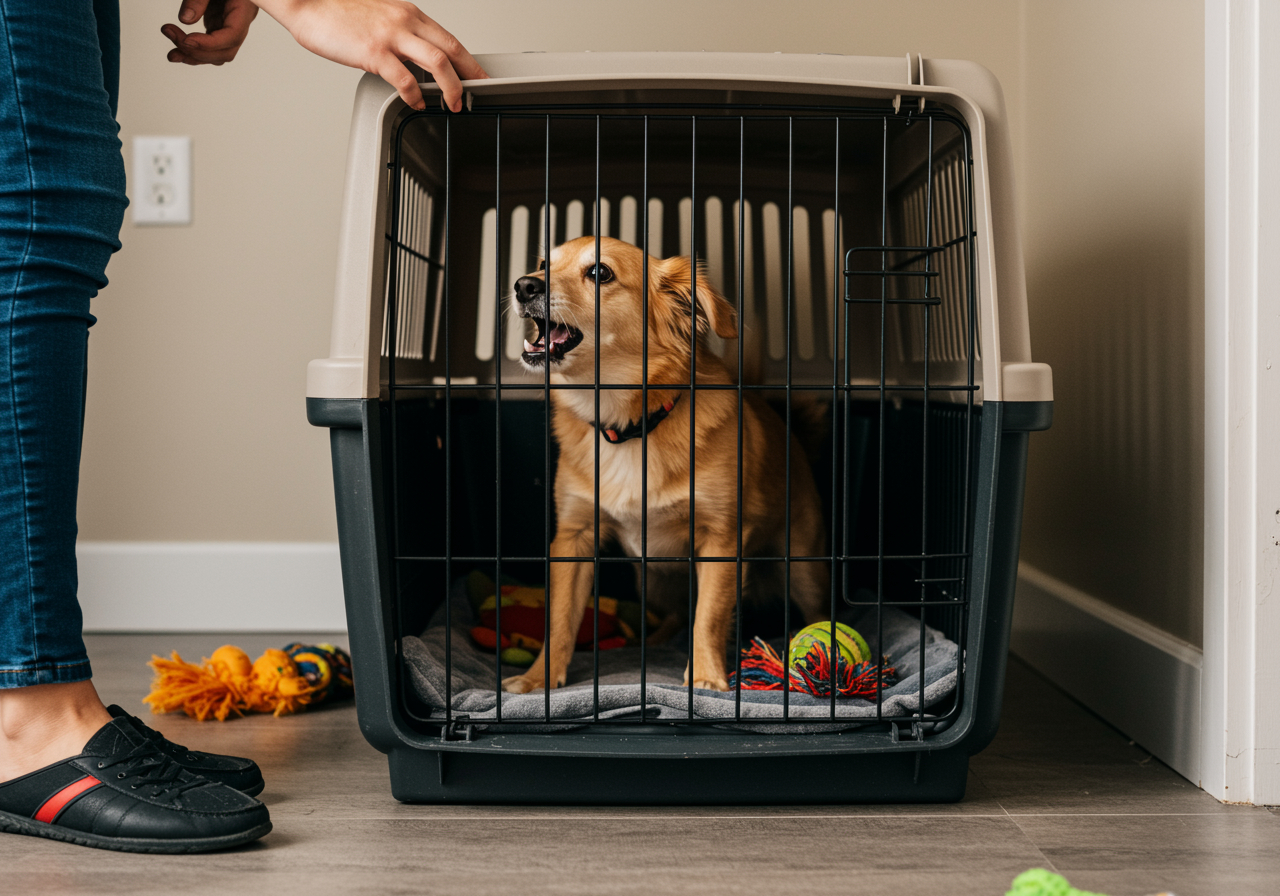
If your dog barks in their crate when you leave, you're not alone. This frustrating behavior affects countless pet owners and can strain relationships with neighbors, disrupt household peace, and indicate genuine distress in your dog. Whether your dog barks when left alone in their crate or only when you're not home, understanding the root causes and implementing proper training techniques can transform your anxious barker into a calm, crate-content companion.
This comprehensive guide addresses why dogs bark in crates, how to control dog barking when not home, and proven strategies to stop your dog from barking when you leave. You'll learn the difference between attention-seeking barking and genuine anxiety, plus step-by-step training protocols that work. This article is part of our complete guide on dogs who cry when their owners leave.
Why Does My Dog Bark When I Leave?
Understanding the underlying cause of crate barking is essential for choosing the right solution. Dogs bark in crates for several distinct reasons, each requiring a different approach.
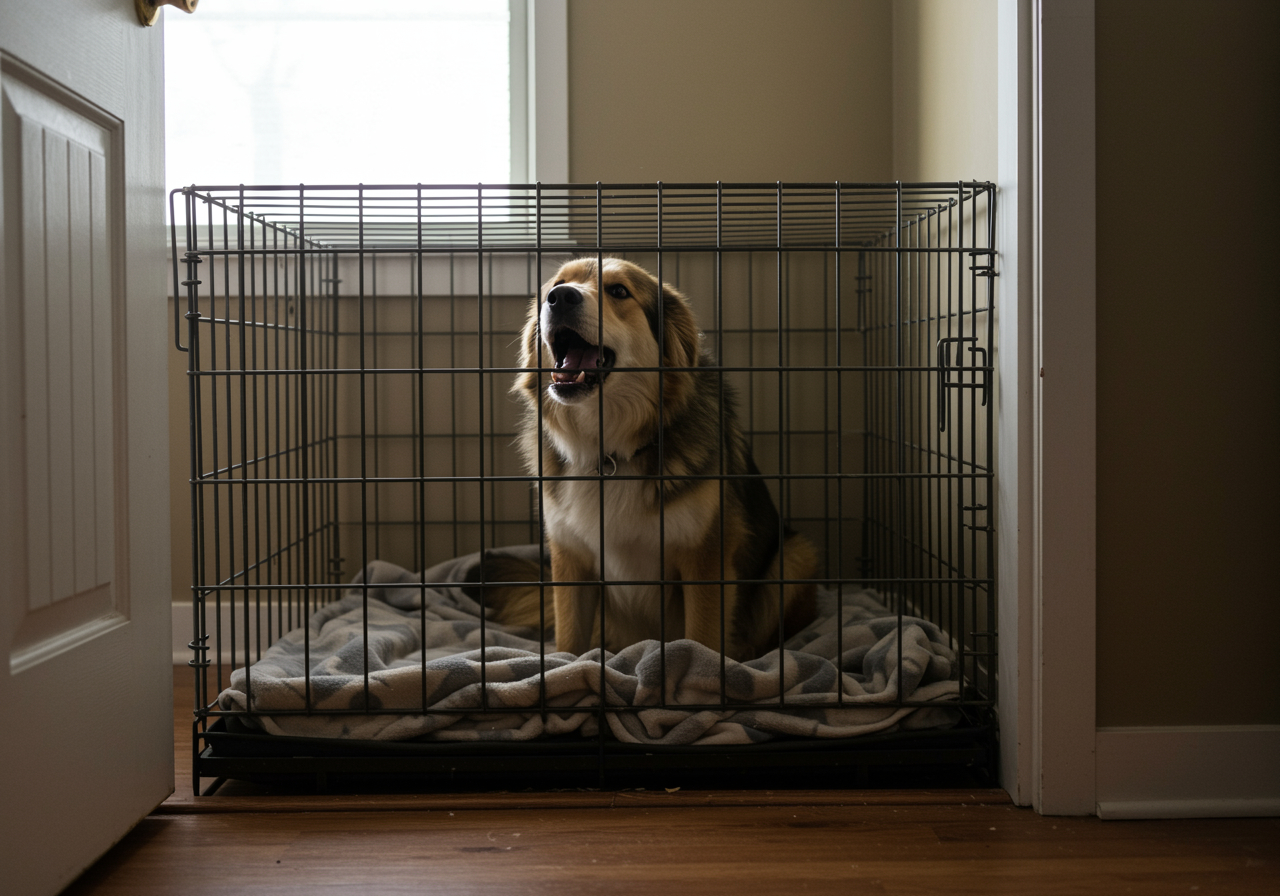
Separation Anxiety vs. Isolation Distress
True separation anxiety involves panic-level distress specifically tied to your absence. Dogs with separation anxiety may show destructive behavior, self-harm, or extreme vocalization that begins immediately when you leave and continues for extended periods. Isolation distress, on the other hand, means your dog simply prefers company—any company—and would be content with another person or pet present. This distinction matters because treatment approaches differ.
Improper Crate Training
Many crate barking issues stem from rushed or negative crate introductions. If the crate was introduced as punishment, your dog associates it with negative experiences. If you skipped gradual acclimation steps and immediately confined your dog for long periods, they never learned that the crate is safe. Dogs who were forced into crates or experienced trauma while crated often bark frantically when confined.
Attention-Seeking Behavior
Some dogs have learned that barking gets results. If you've previously returned to let your dog out when they bark, or spoken to them through the door, you've inadvertently reinforced barking as an effective communication tool. This learned behavior can be particularly persistent because it's been successful in the past.
Physical Needs
Sometimes dog barking in crate simply indicates legitimate needs. Your dog might need to eliminate, be hungry or thirsty, feel too hot or cold, or be in pain or discomfort. Always rule out physical causes before assuming behavioral issues.
Signs Your Dog Has Crate Anxiety
Recognizing whether your dog experiences true anxiety versus simple displeasure helps target your training approach effectively.
Behavioral Indicators
- Frantic barking: Continuous, high-pitched barking with no breaks that starts immediately upon confinement
- Destructive behavior: Chewing crate bars, scratching at crate doors, or damaging bedding
- Escape attempts: Aggressive attempts to break out, sometimes causing injury to teeth or paws
- Refusal to enter: Resistance to entering the crate, backing away, or hiding when crate time approaches
- Excessive drooling or panting: Physical stress responses even in comfortable temperatures
Duration and Pattern
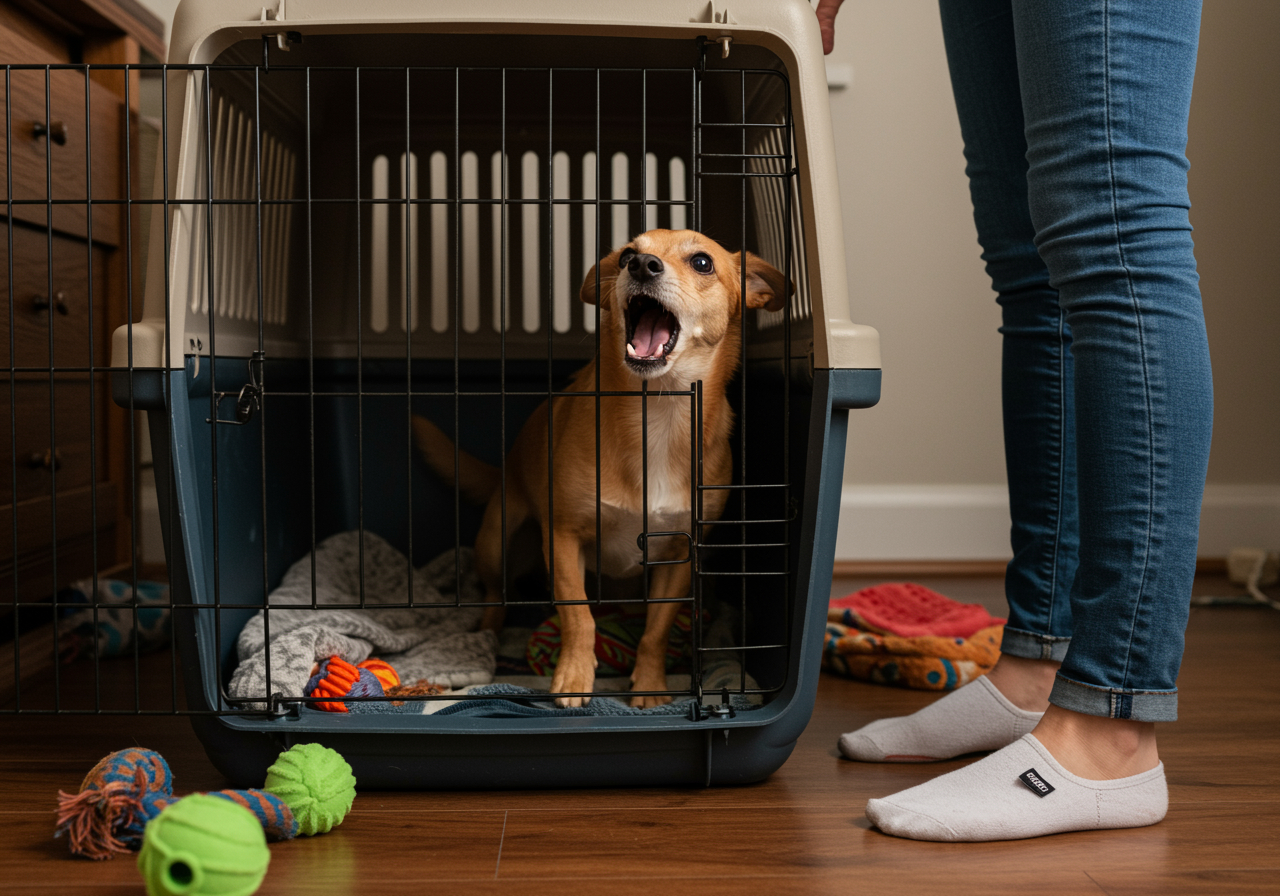
Attention-seeking barking typically subsides within 5-15 minutes as the dog gives up and settles. Anxiety-driven barking continues for 30 minutes or longer, sometimes the entire time you're gone. Dogs with anxiety may calm briefly but resume barking sporadically, while attention-seekers usually settle once they realize barking won't work.
How to Stop Dog Barking When Not Home
Addressing crate barking requires a multi-faceted approach combining proper crate training, behavior modification, and environmental management.
Re-establishing Positive Crate Associations
If your dog has negative associations with their crate, you need to start over with proper introduction. Remove any pressure—leave the crate door open and make it inviting with comfortable bedding and toys. Feed all meals inside the crate with the door open. Toss high-value treats randomly into the crate throughout the day. Play games where your dog voluntarily enters to retrieve toys. Create a trail of treats leading into and out of the crate. Only once your dog enters willingly and relaxes inside should you proceed to the next steps.
Gradual Desensitization to Door Closure
Once your dog is comfortable in the open crate, begin very gradual door-closing practice. Start by closing the door for just one second while you remain immediately present. Open before any distress begins and reward calm behavior. Gradually increase duration: 2 seconds, 5 seconds, 10 seconds, 30 seconds, and so on. This process might take days or weeks—rushing guarantees failure. The key is returning and opening the door before barking or anxiety starts, not after.
Building Duration and Distance
After your dog can handle a closed door with you present for several minutes, add distance. Close the door and step back one foot. Return immediately if your dog remains calm, reward, and repeat. Gradually increase distance until you can leave the room briefly. Then practice leaving sight but staying nearby. Eventually, extend to leaving the house for very short periods (30 seconds initially). Always return before anxiety builds—success comes from hundreds of successful repetitions, not from pushing through distress.
The Importance of Timing
Never let your dog out of the crate while barking—this reinforces barking as an effective strategy. Wait for even a brief pause in barking before opening the door. If barking is continuous, create a pause by making a small sound that interrupts the pattern, then immediately open during that moment of quiet. Over time, increase the required quiet duration before release.
How to Control Dog Barking When Not Home
Managing the barking you can't directly supervise requires preparation and environmental setup.
Pre-Departure Exercise and Mental Stimulation
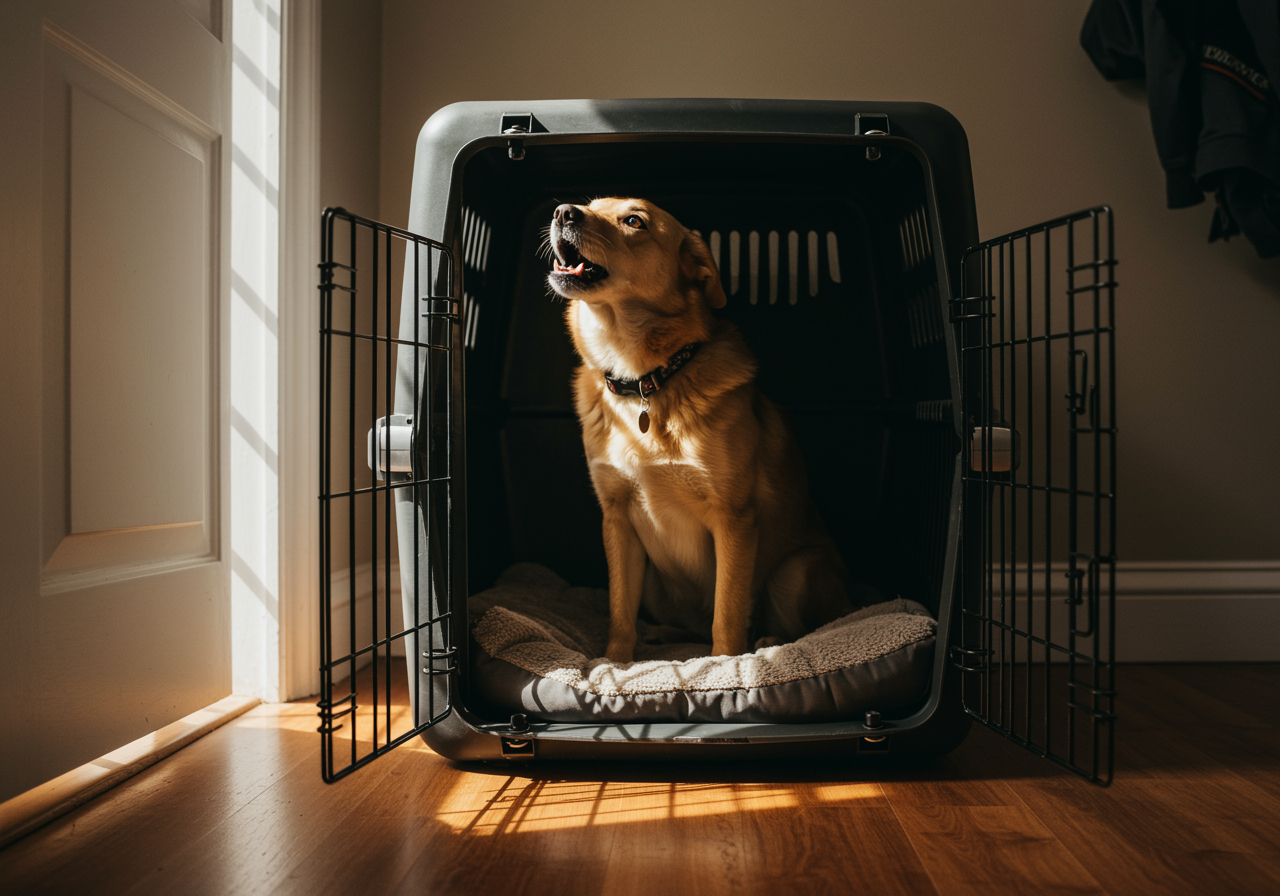
A tired dog is a quieter dog. Ensure your dog receives adequate physical exercise 30-60 minutes before crating. The type and duration depend on age, breed, and health status, but should be enough to tire them without overstimulation. Equally important is mental exercise—training sessions, puzzle toys, or scent work can exhaust a dog mentally, making them more likely to rest when crated.
Crate Location Matters
Where you place the crate significantly impacts your dog's comfort level. Ideal locations are in quiet areas with minimal foot traffic or noise, away from windows where outside activity might trigger barking, but not in isolated, unused rooms which can increase anxiety. Consider a location where your dog can see a family gathering area when not crated, building positive associations. Some dogs do better with crates partially covered to create a den-like atmosphere, while others prefer open visibility.
Providing Appropriate Distractions
Give your dog something to do in the crate. Stuff a Kong toy with frozen peanut butter or wet food—this can occupy a dog for 20-30 minutes. Provide long-lasting chews like bully sticks (if safe for your dog unsupervised). Use puzzle toys that dispense kibble slowly. Rotate toys so they remain novel and interesting. Introduce special toys that only appear during crate time, making confinement a positive, anticipated event.
White Noise and Music
Ambient sound can calm anxious dogs and mask triggering external noises. White noise machines create consistent sound that drowns out unpredictable noises. Classical music or dog-specific calming music has been shown to reduce stress. Audiobooks or talk radio can provide comforting human voice sounds. Experiment to find what works best for your dog—some prefer quiet, others find sound comforting.
How to Stop My Dog from Barking When I Leave
Your departure routine can significantly influence your dog's barking behavior. Many owners inadvertently trigger anxiety through their leaving patterns.
Desensitizing Departure Cues
Dogs quickly learn pre-departure cues: picking up keys, putting on shoes, grabbing bags. These cues trigger anxiety before you even leave. Desensitize by performing these actions randomly throughout the day without leaving. Pick up your keys and sit on the couch. Put on shoes and watch TV. Grab your bag and make a snack. When these actions no longer predict departure, they lose their anxiety-triggering power.
Practice Calm Departures and Arrivals
Emotional, dramatic departures heighten anxiety. Instead, make leaving and returning boring. Don't speak to your dog, make eye contact, or touch them for 5-10 minutes before crating and leaving. Place them in the crate matter-of-factly without fanfare. When you return, completely ignore your dog for 5-10 minutes until they're calm, then greet quietly. This teaches that departures and arrivals are non-events, nothing to become anxious about.
Randomizing Your Routine
If your dog knows exactly when you leave each day, anxiety may build in anticipation. When possible, vary your departure times slightly. Practice crating your dog even when you're home, randomly throughout the day for various durations. This prevents the crate from always meaning "owner is leaving for a long time."
Dog Barks When Left Alone: Special Considerations
Certain situations require modified approaches to standard crate barking protocols.
Puppies vs. Adult Dogs
Puppies have limited bladder control and cannot be crated as long as adults. Puppy crate barking might indicate a genuine need to eliminate. Use the age-in-months-plus-one formula: a 3-month-old can hold it for approximately 4 hours maximum. Puppies also have shorter attention spans and may bark from boredom more quickly than adults. For comprehensive puppy-specific guidance, see our article on leaving puppies home alone and stopping puppy crying.
Rescue Dogs with Unknown Histories
Rescue dogs may have traumatic crate experiences or abandonment issues. Progress may be slower and require more patience. Never force a rescue dog with severe crate anxiety—consider alternative confinement like puppy-proofed rooms or exercise pens initially. Build trust gradually through positive associations before introducing crate confinement. Some rescue dogs may never be comfortable in crates and that's okay—their wellbeing matters more than the convenience of crating.
Medical Issues Causing Barking
Always rule out medical causes for sudden onset crate barking. Urinary tract infections cause urgent bathroom needs. Arthritis or joint pain may make lying down uncomfortable. Cognitive dysfunction in senior dogs causes confusion and anxiety. If your previously calm dog suddenly develops crate barking, consult your veterinarian before assuming it's behavioral.
Alternative Solutions and Tools
Beyond training, several products and alternatives can help manage crate barking.
Anxiety-Reducing Products
Adaptil (DAP) diffusers or collars release calming dog pheromones that can reduce anxiety. Thunder shirts or anxiety wraps provide gentle pressure that soothes some dogs. Calming supplements containing L-theanine, chamomile, or melatonin may help mild cases (consult your vet). Lick mats with frozen spreadable treats provide extended engagement. These are supplements to training, not replacements, but can provide additional support during the modification process.
Crate Alternatives
Not all dogs need to be crated. Alternatives include puppy-proofed rooms or areas with baby gates, exercise pens that provide more space while maintaining boundaries, and designated "safe rooms" with comfortable bedding and toys. Some dogs simply do better with more space and less confinement. The goal is your dog's safety and comfort—if crating causes extreme distress despite proper training, alternative confinement may be more appropriate.
Pet Cameras and Monitoring
Interactive pet cameras let you monitor your dog's behavior when you're not home. Some cameras allow treat dispensing to reward quiet behavior. Two-way audio lets you hear what's happening (though speaking through cameras can sometimes worsen anxiety). Monitoring helps you understand when barking occurs, how long it lasts, and whether it's improving over time, allowing you to adjust your approach based on real data rather than guessing.
When to Seek Professional Help
Some crate barking cases require professional intervention. Recognizing when you need expert help prevents prolonging your dog's distress.
Signs You Need a Professional
Consider consulting a certified dog behavior professional if barking is severe and continuous for hours, your dog is injuring themselves trying to escape, there's no improvement after 4-6 weeks of consistent training, the behavior is worsening despite your efforts, or your dog shows signs of severe panic or anxiety. Professional help is not a failure—it's responsible pet ownership when your dog needs expert intervention.
Types of Professionals
Certified veterinary behaviorists (DACVB) are veterinarians with specialized behavioral training who can prescribe medication if needed. Certified professional dog trainers (CPDT-KA) with anxiety specialization offer structured training programs. Certified applied animal behaviorists (CAAB/ACAAB) hold advanced degrees in behavior. Look for credentials and positive reinforcement approaches—avoid trainers using punishment, shock collars, or dominance-based methods which can severely worsen anxiety.
The Role of Medication
For severe cases, anti-anxiety medication can be an important component of treatment. Medication doesn't cure barking or anxiety, but reduces distress enough that your dog can learn new behaviors through training. Common options include SSRIs like fluoxetine for long-term management, situational medications like trazodone for specific events, and natural supplements for mild cases. Medication should always accompany behavior modification, not replace it, and must be prescribed by a veterinarian.
Common Mistakes to Avoid
Certain approaches seem logical but actually worsen crate barking. Avoid these common mistakes:
Letting Your Dog Out While Barking
This is the number one mistake owners make. Releasing your dog from the crate while they're barking teaches them that barking works. You've just reinforced the exact behavior you want to eliminate. Always—always—wait for quiet before opening the crate, even if you have to create a momentary pause by interrupting the barking pattern.
Using Punishment
Yelling at, spraying, or using shock collars on a barking dog increases anxiety and worsens the problem. Punishment doesn't address the underlying cause (anxiety, fear, or attention-seeking) and can damage your relationship with your dog. These methods may temporarily suppress barking through fear, but the anxiety remains and often manifests in other destructive or unhealthy behaviors.
Rushing the Training Process
Progress takes time—weeks or months, not days. Rushing through desensitization steps guarantees setbacks. If you push your dog past their threshold, you undo previous progress and potentially worsen anxiety. Slow, gradual exposure with hundreds of successful repetitions is far more effective than forcing your dog to "tough it out."
Inconsistency
Training works only when applied consistently. If you sometimes let your dog out when barking and sometimes don't, you create confusion and actually strengthen the barking behavior through intermittent reinforcement (the most powerful reinforcement schedule). Everyone in the household must follow the same protocols.
Long-Term Management
Successfully addressing crate barking requires ongoing commitment. Here's how to maintain progress and prevent regression.
Continuing Practice
Even after your dog is comfortable in the crate, continue practicing. Randomly crate your dog for short periods when you're home to maintain positive associations. Don't only crate immediately before leaving, which can create anxiety about crate time. Periodic refresher training prevents backsliding.
Life Changes and Regression
Major life changes—moving homes, schedule changes, new family members, or traumatic events—can trigger regression in previously crate-comfortable dogs. This is normal. If regression occurs, return to earlier training steps, rebuild confidence gradually, and don't get discouraged. Temporary setbacks don't mean permanent failure.
Adjusting for Age
As dogs age, their needs change. Senior dogs may develop arthritis making certain positions uncomfortable, or cognitive dysfunction causing confusion. You may need to adjust crate size, bedding, location, or even transition away from crating if it no longer serves your elderly dog's wellbeing. For age-specific guidance, read our article on how long dogs can be left alone at different life stages.
Conclusion: From Barking to Calm
A dog who barks in their crate when you leave is communicating distress, frustration, or anxiety that deserves your patient attention. Whether your challenge is how to stop dog barking when not home or how to control dog barking more generally, the solution lies in understanding your dog's specific triggers and addressing them through systematic, positive training.
Remember the key principles: never reinforce barking by releasing your dog while they vocalize, build crate comfort gradually through positive associations, ensure physical and mental exercise before confinement, make departures and arrivals calm and boring, and be patient—progress takes time but is achievable with consistency.
Understanding why your dog barks when you leave and implementing proper crate training protocols can transform your stressed barker into a calm, crate-content companion. This is one piece of the larger puzzle of helping dogs who cry when their owners leave—address the root causes, train with compassion, and both you and your dog will enjoy peaceful, stress-free separations.
Ready to help your dog feel comfortable in their crate? Start today with just five minutes of positive crate association practice. Place a treat in the crate, let your dog retrieve it, and that's a success. Build from there, one small step at a time, and watch your dog transform into a calm, crate-loving companion.
Key Takeaways
- Dogs bark in crates due to anxiety, improper training, attention-seeking, or physical needs
- Never let your dog out while barking—wait for quiet to avoid reinforcing the behavior
- Gradual desensitization to the crate and door closure is essential for long-term success
- Pre-departure exercise and mental stimulation reduce barking by tiring your dog
- Calm, boring departures and arrivals prevent anxiety escalation
- Punishment worsens crate anxiety—use only positive reinforcement methods
- Professional help is appropriate for severe or non-improving cases