
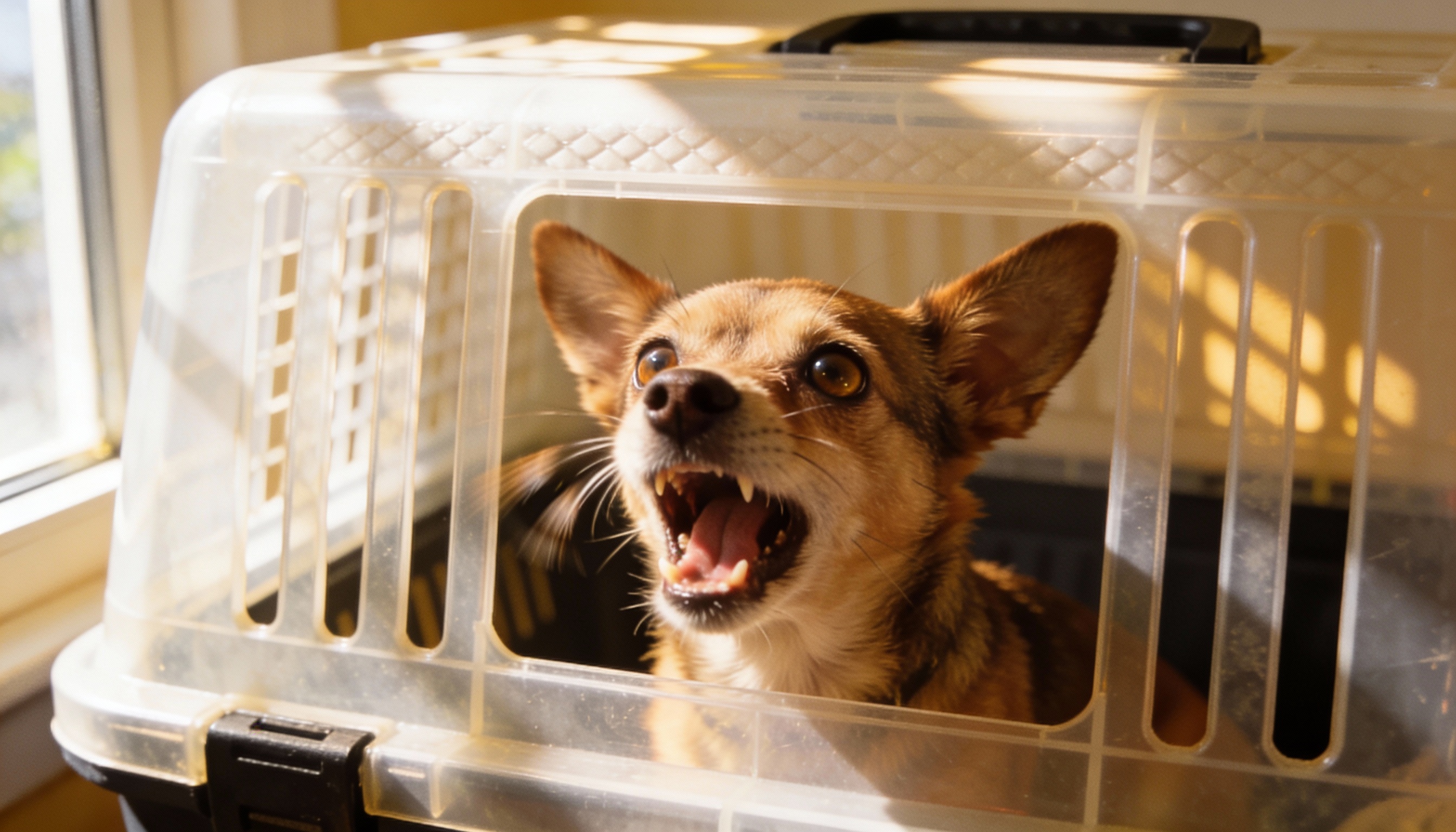
Key Takeaways
- Most crate barking stems from separation anxiety, boredom, or lack of proper crate training
- Never let your dog out of the crate while barking - this rewards and reinforces the behavior
- Gradual desensitization over 2-4 weeks is more effective than forcing extended crate time
- Puppies have different needs than adult dogs and require age-appropriate training approaches
- Sudden onset barking in previously quiet dogs may indicate medical issues requiring veterinary attention
- The right crate setup, location, and routine dramatically impact success
Why Your Dog Won't Stop Barking in the Crate
Understanding the underlying cause of crate barking is the first step toward solving it. Dogs rarely bark "for no reason" - they're communicating a need, discomfort, or emotional state.
Separation Distress and Anxiety
This is the most common cause of crate barking. Dogs are social animals, and being isolated in a crate can trigger anxiety, especially if they haven't been properly conditioned to view the crate as a safe space. Signs that separation is the issue include:
- Barking that starts immediately when you leave the room or house
- Escalating volume and intensity of vocalizations
- Accompanying behaviors like whining, howling, scratching, or attempting to escape
- Excessive salivation, panting, or destructive behavior when crated
- Calmness when the crate door is open but stress when it's closed
Insufficient Exercise and Mental Stimulation
A dog with excess energy cannot settle in a crate. If your dog hasn't had adequate physical exercise and mental stimulation before crate time, barking is their way of saying "I'm not tired yet!" This is particularly common in high-energy breeds like Border Collies, Australian Shepherds, Jack Russell Terriers, and sporting breeds.
Bathroom Needs
Puppies under 6 months have limited bladder control - roughly one hour per month of age. A 3-month-old puppy can typically hold it for about 3-4 hours maximum. If your puppy is barking after being crated longer than this, they likely need to eliminate. Adult dogs may also bark if they've had too much water before crating or have digestive issues.
Negative Crate Associations
If the crate has been used as punishment, or if your dog had traumatic experiences in a crate (like being left too long and forced to eliminate), they may have developed fear of the crate itself. This requires re-conditioning from scratch.
Attention-Seeking Behavior
If your dog has learned that barking results in being let out, receiving attention, or otherwise getting what they want, the barking becomes a trained behavior. Even negative attention (yelling "quiet!") can reinforce barking in dogs who are desperate for any interaction.
Medical Issues
If a previously quiet dog suddenly begins barking excessively in their crate, rule out medical causes first. Pain, digestive problems, urinary tract infections, cognitive dysfunction (in senior dogs), or anxiety disorders can all manifest as increased vocalization.
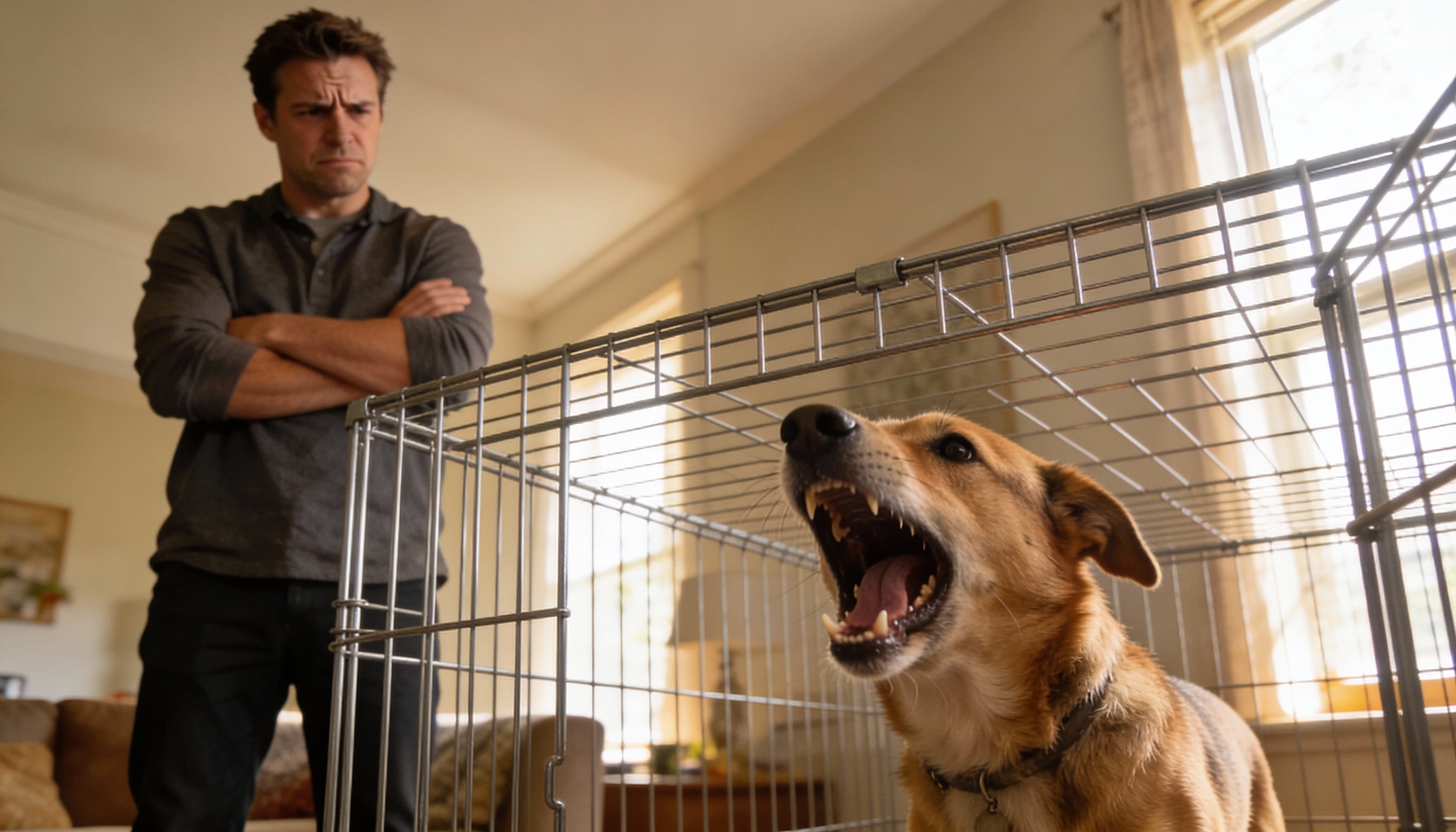
How to Get Dog to Stop Barking in Crate: Immediate Management
While you're working on long-term training, these management strategies prevent the behavior from becoming more entrenched.
The Cardinal Rule: Never Reward Barking
This is the single most important principle: Never open the crate door while your dog is barking, whining, or showing stress behaviors. Even if you're just checking on them or you feel guilty - opening that door teaches your dog that barking = freedom. You must wait for even 2-3 seconds of silence before opening the door.
If your dog barks for 10 minutes straight, you wait. The moment they pause to take a breath, immediately open the door. This teaches that silence, not noise, opens the crate. Yes, this is difficult, especially with neighbors or family members complaining, but consistency is critical.
Proper Crate Setup
An improperly set up crate contributes to barking:
- Size: The crate should be just large enough for your dog to stand up, turn around, and lie down comfortably. Too large, and dogs may eliminate in one corner and sleep in another, defeating housetraining. Too small, and it's genuinely uncomfortable.
- Bedding: Provide comfortable bedding unless your dog destroys it. Some dogs prefer cooler surfaces, so offer options.
- Location: Initially, place the crate in a room where the family spends time. Complete isolation can worsen anxiety. However, high-traffic areas with constant stimulation prevent rest.
- Cover: Many dogs feel more secure with a cover over the crate, creating a den-like environment. Leave the front open for ventilation and visibility.
- Temperature: Ensure the crate area isn't too hot or cold. Dogs in crates can't move to find comfortable temperatures.
Pre-Crate Routine
Establish a consistent routine before crating:
- Exercise: 20-45 minutes of physical activity appropriate to your dog's age and breed
- Bathroom Break: Always give an opportunity to eliminate immediately before crating
- Mental Stimulation: 10-15 minutes of training or puzzle toys to tire the brain
- Calm Transition: 5-10 minutes of quiet settling time before entering the crate
- High-Value Item: Provide a stuffed Kong, bully stick, or other safe, long-lasting chew in the crate
White Noise and Calming Aids
Environmental modifications can significantly reduce barking:
- White Noise Machine: Masks outside sounds that might trigger barking and creates a consistent auditory environment
- Classical Music: Studies show that classical music or specifically designed dog relaxation music (like Through a Dog's Ear) reduces stress behaviors
- Calming Pheromones: Adaptil diffusers or sprays mimic the pheromone mother dogs produce, creating a sense of safety
- Calming Supplements: Products containing L-theanine, chamomile, or valerian root may help anxious dogs (consult your vet first)
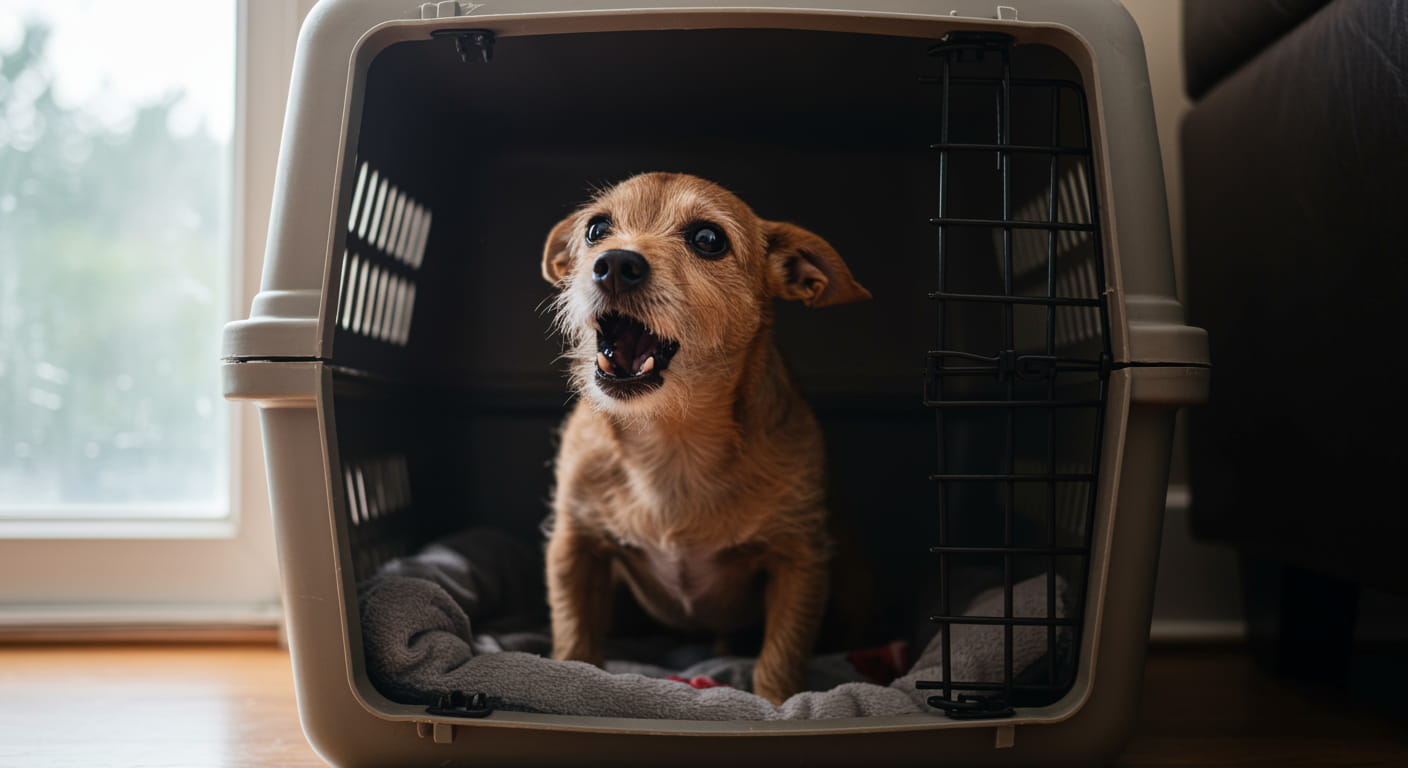
How to Stop a Puppy from Barking in Crate: Age-Specific Training
Puppies have unique needs and limitations that require modified approaches.
Realistic Expectations for Puppies
Puppies under 16 weeks are still developing emotional regulation and bladder control. Expecting silent, overnight crating of a 10-week-old puppy is unrealistic. Instead:
- 8-12 weeks: Maximum 2-3 hours crated during the day, with nighttime bathroom breaks every 3-4 hours
- 3-4 months: 3-4 hours daytime, may sleep 5-6 hours at night
- 5-6 months: 4-5 hours daytime, can usually sleep through the night (7-8 hours)
- 6+ months: Approaching adult bladder control, can work up to 6-8 hours (though this should be the maximum, not the norm)
Gradual Crate Conditioning for Puppies
This method prevents crate aversion from developing:
Days 1-3: Feed all meals in the crate with the door open. Toss treats into the crate randomly throughout the day. Allow puppy to explore and exit freely. Never close the door.
Days 4-7: After puppy enters for a treat or meal, close the door for 5 seconds, then immediately open. Repeat 10-15 times per day, gradually increasing to 30 seconds, then 1 minute. Always open the door during a quiet moment, not during whining.
Week 2: Extend duration to 5 minutes, then 10, then 15. Stay in the room visibly present. If puppy whines, you've progressed too fast - go back to the previous successful duration.
Week 3: Practice short departures - close the crate and step out of sight for 30 seconds. Return during quiet moment and release. Gradually increase out-of-sight duration.
Week 4+: Work up to leaving the house for short periods (5-10 minutes). Always return before puppy becomes distressed.
Nighttime Crate Training for Puppies
Nighttime is often the most challenging time for new puppy owners:
- Crate Location: Place the crate in your bedroom initially. Proximity to you reduces anxiety and allows you to hear genuine bathroom needs vs. protest barking.
- Bedtime Routine: Remove water 1-2 hours before bed. Last bathroom break should be immediately before crating. Provide a safe chew toy.
- Middle-of-Night Wake-Ups: When puppy wakes and cries, wait 30-60 seconds to ensure they're truly awake and need out (not just stirring in sleep). Take them directly outside on leash, allow elimination, then immediately back to crate with no play or interaction. This teaches nighttime is for sleeping, not playing.
- Gradual Distancing: Once puppy sleeps quietly through the night in your room (usually by 4-5 months), you can gradually move the crate to its permanent location over several weeks.
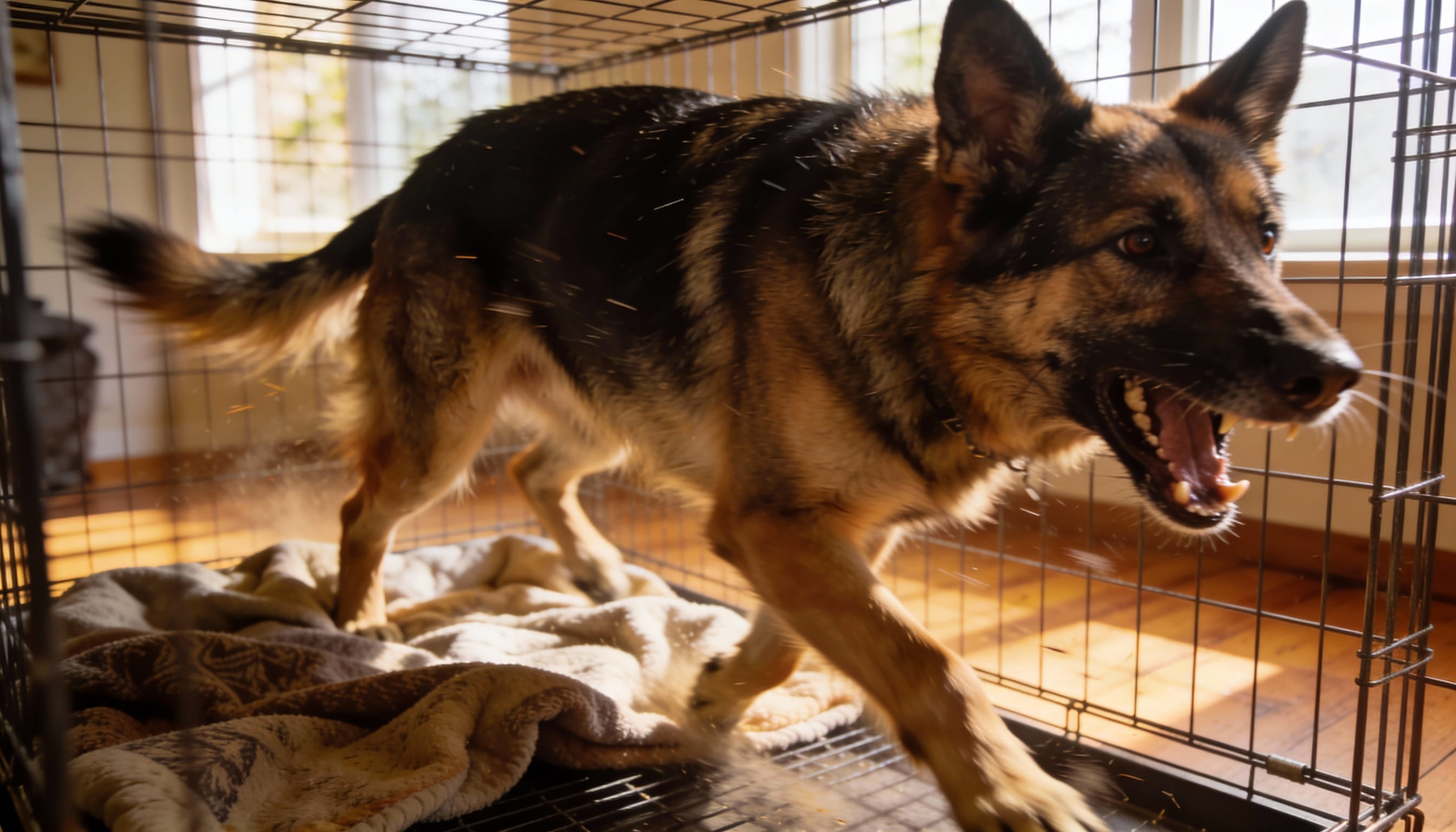
How to Stop Dog from Barking in Kennel: Training for Adult Dogs
Adult dogs who weren't properly crate-trained as puppies require patient re-conditioning. The same gradual approach applies, but you may progress faster than with puppies.
Desensitization Protocol for Anxious Adult Dogs
This systematic approach changes your dog's emotional response to the crate:
Step 1 - Creating Positive Associations (Week 1):
- Remove the crate door entirely
- Place incredibly high-value items in the crate (special treats, meals, favorite toys)
- Practice "find it" games where treats are scattered in the crate
- Never force your dog into the crate - all entries must be voluntary
- Provide puzzle toys and long-lasting chews exclusively in the crate
Step 2 - Duration Without Confinement (Week 2):
- Continue no-door exercises but encourage longer stays
- Sit quietly near the crate while dog eats meals or works on chews
- Reward your dog for choosing to rest in the crate voluntarily
- Practice "place" or "crate" command with heavy reinforcement
Step 3 - Introducing the Closed Door (Week 3):
- Reattach the door but leave it open
- Occasionally close it for 5 seconds while dog is eating or chewing, then open
- Gradually increase duration: 10 seconds, 30 seconds, 1 minute
- Stay visible and present during all closed-door sessions
- If dog shows stress, open immediately and return to shorter durations
Step 4 - Adding Distance (Week 4):
- Close door and take one step away, return, open door
- Gradually increase distance and duration
- Practice leaving the room for 5 seconds, 10 seconds, 30 seconds
- Randomize durations to prevent predictability
The "Relaxation Protocol" for Crate Training
Dr. Karen Overall's Relaxation Protocol, adapted for crate training, teaches dogs to remain calm regardless of what's happening around them:
- Have your dog in the crate with the door closed (start at a duration they can handle)
- Perform various movements: sit down, stand up, walk to the door, clap hands, etc.
- Only reward your dog when they remain calm during these activities
- If they bark or show stress, freeze until they calm, then reward the calm
- Gradually increase the challenge of movements and sounds over 15-20 sessions
This teaches that the crate is a place to relax regardless of environmental stimulation, and that your movements don't predict anything meaningful.
Troubleshooting Specific Barking Scenarios
Dog Barking in Crate All of a Sudden
If a previously quiet dog begins barking in their crate, investigate:
- Medical Issues: Schedule a vet visit to rule out pain, UTIs, gastrointestinal problems, or cognitive changes
- Environmental Changes: New neighbors, construction noise, wildlife activity, or changes in household routine can trigger anxiety
- Life Stage Changes: Adolescence (6-18 months) often brings behavior regressions. Senior dogs may develop age-related anxiety
- Traumatic Event: Did something scary happen while crated? (Thunderstorm, loud noise, earthquake, etc.)
Address the underlying cause rather than just the symptom. You may need to restart crate conditioning from earlier steps.
My Dog Won't Stop Barking in His Kennel When I Leave
This is separation-specific anxiety requiring a different approach:
- Practice departures when you're not actually leaving - put on shoes, grab keys, go to door, then return and sit down
- Vary your departure cues so they don't predict your absence
- Start with micro-absences: 10 seconds, 30 seconds, 1 minute
- Don't make departures emotional - no long goodbyes or excessive affection
- Provide extra-special items (frozen Kong, puzzle feeder) only when leaving
- Consider whether your dog actually needs to be crated when alone, or if a dog-proofed room might reduce anxiety
For severe separation anxiety, see our guide on crate training for dogs with separation anxiety.
Dog Keeps Barking in Kennel After Exercise
If your dog barks despite adequate exercise, consider:
- Over-Arousal: Intense exercise immediately before crating can elevate arousal too high for settling. Include a 15-minute calm-down period.
- Wrong Exercise Type: Some dogs need mental stimulation more than physical. Try training sessions, scent work, or puzzle toys instead of just fetch.
- Insufficient Exercise: High-energy breeds may need significantly more than you're providing. A Border Collie might need 2+ hours of combined mental and physical work.
- Routine Issues: Dogs thrive on predictability. Ensure crating happens at consistent times with consistent routines.
When to Seek Professional Help
Some crate barking situations require professional intervention:
- Your dog is injuring themselves trying to escape (broken teeth, bloody paws, torn nails)
- Barking has continued for more than 6 weeks despite consistent training
- Your dog shows signs of severe panic (excessive salivation, vomiting, urination/defecation despite bathroom breaks)
- Noise complaints from neighbors or landlord are threatening your housing
- Your dog's stress in the crate is affecting their overall health and wellbeing
- You're unable to remain consistent due to emotional stress
A certified professional dog trainer (CPDT-KA) or veterinary behaviorist can create a customized behavior modification plan. In severe cases, anti-anxiety medication may be recommended as a temporary aid while working on training.
Alternative Confinement Options
Not every dog will be comfortable in a traditional wire crate. Consider these alternatives:
- Soft-Sided Crates: Some dogs find these less confining and more den-like
- Plastic Airline Crates: More enclosed, often preferred by anxious dogs
- Exercise Pens: Provide more space while still offering confinement
- Dog-Proofed Room: A bathroom or laundry room may work better for dogs with true crate phobia
- Gradual Freedom: Once trustworthy, some dogs do better with freedom in increasingly larger spaces
The goal is a safe, anxiety-free solution for both you and your dog - that doesn't always mean a traditional crate.
Related Articles
Final Thoughts
Crate barking is one of the most common and frustrating dog behavior issues, but it's also highly treatable with patience and consistency. The key is understanding that the crate should never be a punishment - it should be your dog's safe haven, their personal sanctuary where they feel comfortable and relaxed.
Remember that progress isn't linear. You'll have excellent days and frustrating setbacks. What matters is the overall trend toward improvement. Every dog is capable of learning to settle quietly in a crate, though the timeline varies from days to months depending on the individual dog and the severity of their anxiety or habits.
Above all, prioritize your dog's emotional wellbeing. A dog who is genuinely comfortable in their crate won't bark excessively because they won't feel the need to. Focus on building that comfort rather than simply suppressing the symptom, and you'll create lasting behavioral change that benefits both you and your dog for years to come.
For additional guidance on overall calmness training, see our comprehensive guide on how to get your dog to relax.