
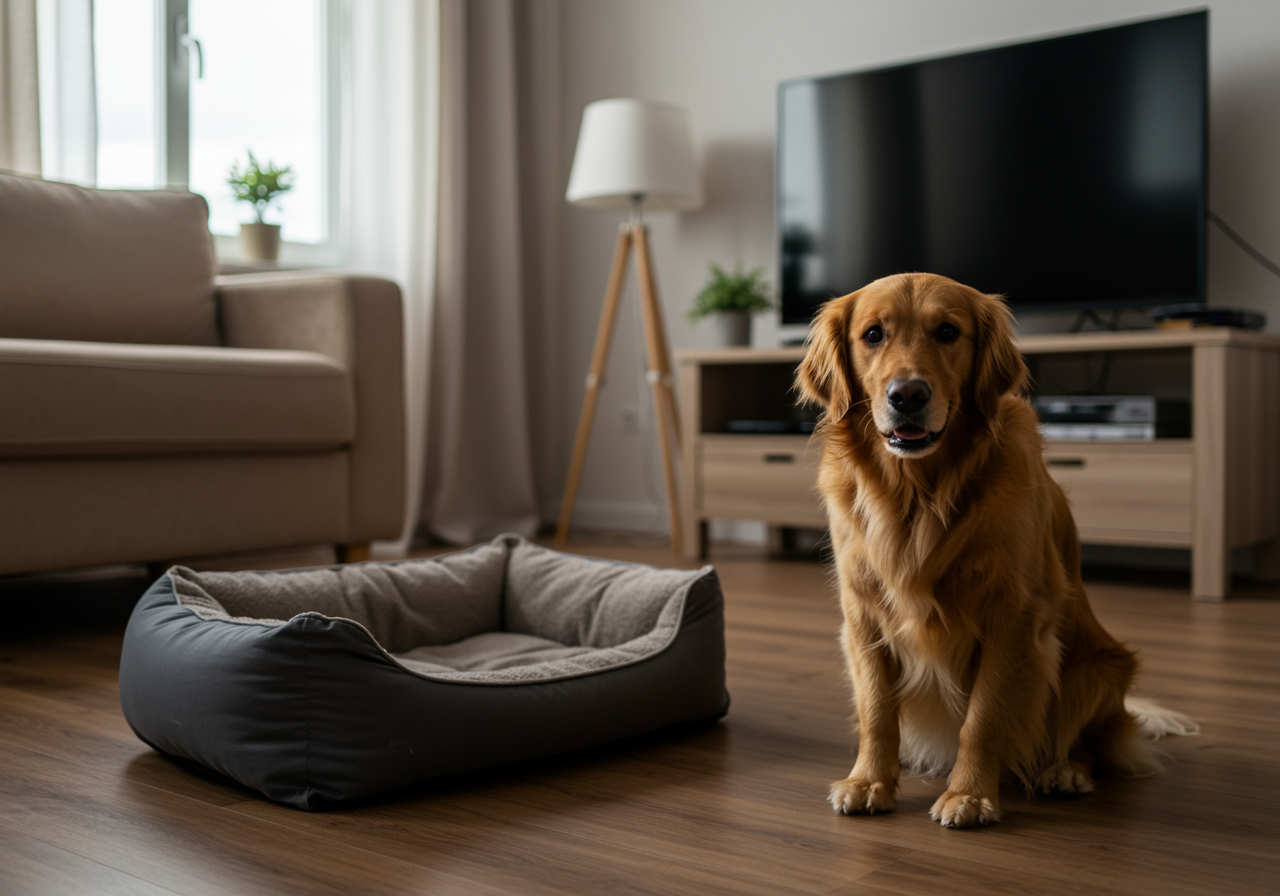
Golden Retrievers are beloved for their friendly, affectionate nature and unwavering devotion to their families. However, these same endearing qualities that make them wonderful companions also make them particularly susceptible to separation anxiety. If you're experiencing golden retriever separation anxiety, you're not alone—this breed is notably prone to distress when left alone, and understanding why is the first step toward effective solutions.
This comprehensive guide explores why Golden Retrievers have separation anxiety more than many other breeds, the specific signs to watch for, and most importantly, breed-specific training solutions and prevention strategies tailored to the unique characteristics of Golden Retrievers. Whether you're dealing with golden retriever anxiety in a young puppy or an adult dog, you'll find expert-backed approaches to help your beloved companion feel confident and secure during your absences.
Why Golden Retrievers Are Prone to Separation Anxiety
Understanding the breed-specific characteristics that predispose Golden Retrievers to separation anxiety helps you appreciate that this isn't a flaw in your individual dog—it's a trait deeply embedded in the breed's history and purpose.
Breed History and Purpose
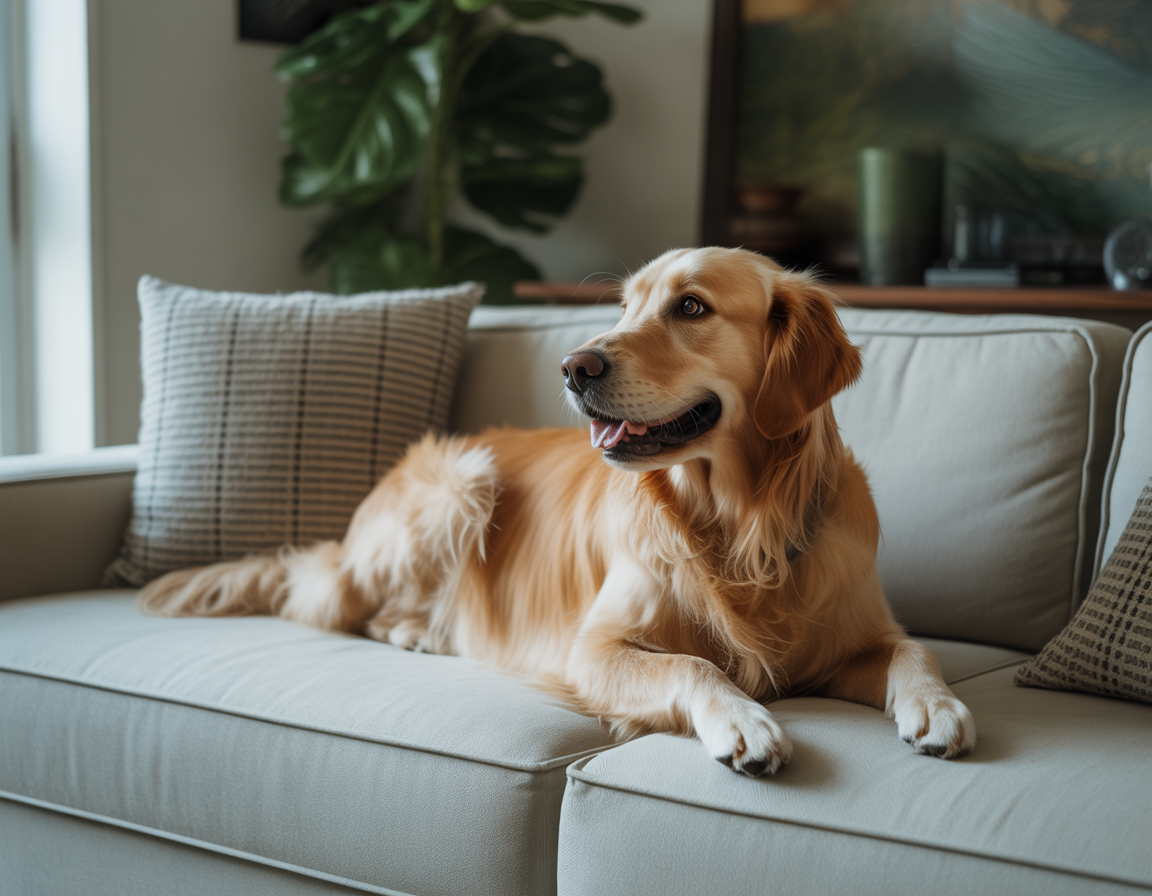
Golden Retrievers were developed in the Scottish Highlands during the mid-1800s as hunting companions who worked closely alongside their human partners. Unlike independent hunting breeds like hounds who work at a distance, Golden Retrievers were bred to stay near their handlers, retrieving game birds and working cooperatively throughout the day. This breeding for close partnership and responsiveness to human direction created dogs who thrive on human interaction and struggle with isolation.
For over 150 years, Golden Retrievers have been selectively bred not just for hunting ability but for their gentle, people-oriented temperament. The dogs who enjoyed human companionship most and bonded most strongly were preferentially bred, intensifying these traits with each generation. The result is a breed that forms exceptionally strong attachments and genuinely needs significant human interaction to feel secure and fulfilled.
Temperament Characteristics
Golden Retrievers possess several temperament traits that, while wonderful in many contexts, increase vulnerability to separation anxiety. They're exceptionally social and crave interaction—not just with their primary owners but with people generally. They're highly attuned to human emotions and routines, meaning they notice subtle cues that signal your departure. They have strong pack instincts and view their human family as their pack, making solitude feel unnatural. They're intelligent and form complex emotional attachments rather than simple dependencies.
Additionally, Golden Retrievers are emotionally sensitive dogs who pick up on their owners' stress and anxiety. If you feel guilty or worried about leaving your Golden alone, they sense this emotion and internalize it, potentially increasing their own anxiety. This emotional attunement, while creating deep bonds, also means your Golden feels your departures more acutely than less sensitive breeds might.
High Energy and Need for Engagement
As sporting dogs, Golden Retrievers were bred for stamina and activity. They have significant exercise needs—most adults require 60-90 minutes of physical activity daily. When these needs aren't met before alone time, pent-up energy manifests as anxiety and destructive behavior. A bored, under-exercised Golden Retriever will struggle to settle when alone, leading to behavior that looks like separation anxiety but actually stems partially from inadequate outlets for their energy.
Equally important are mental stimulation needs. Golden Retrievers are intelligent problem-solvers who need mental challenges. Without adequate mental engagement, they become anxious and destructive. This combination of high physical and mental needs means Golden Retrievers require more preparation before being left alone than many lower-energy breeds.
Do Golden Retrievers Have Separation Anxiety More Than Other Breeds?
Many Golden Retriever owners wonder: do Golden Retrievers have separation anxiety at higher rates than other breeds? The research and clinical evidence suggest yes—Golden Retrievers are overrepresented in separation anxiety cases compared to the general dog population.
Statistical Evidence
Studies of separation anxiety in dogs consistently identify certain breeds as more prone to the condition. Golden Retrievers, along with Labrador Retrievers, German Shepherds, and other working/sporting breeds, appear more frequently in separation anxiety cases than their population numbers would predict. While exact percentages vary by study, veterinary behaviorists report that Golden Retrievers are among the breeds they most frequently treat for separation-related issues.
However, it's important to note that separation anxiety affects dogs of all breeds, mixed breeds included. Being a Golden Retriever doesn't guarantee separation anxiety, just as being a more independent breed doesn't guarantee immunity. Individual temperament, early experiences, and training all play significant roles alongside breed predisposition.
Comparison to More Independent Breeds
Comparing Golden Retrievers to more independent breeds illustrates the difference. Terriers, bred to hunt independently underground, generally handle alone time well. Many hound breeds, which track scents over long distances away from handlers, are comfortable working and being alone. Livestock guardian breeds like Great Pyrenees were bred to spend long periods alone with flocks, making solitude natural for them.
In contrast, companion and sporting breeds like Golden Retrievers, Cavalier King Charles Spaniels, and Vizslas were specifically bred for constant human interaction. For these breeds, being alone contradicts their fundamental purpose and instincts. This doesn't make them inferior—it simply means they require more intentional independence training and management around alone time.
Nature vs. Nurture
While Golden Retrievers are predisposed to separation anxiety, this predisposition isn't destiny. Early training, gradual independence building, and appropriate management can raise a Golden Retriever who handles alone time confidently. Conversely, even independent breeds can develop separation anxiety with poor early experiences or traumatic events.
Think of breed predisposition as vulnerability, not inevitability. A Golden Retriever might require more gradual, careful independence training than a terrier, but with proper effort, most Golden Retrievers can learn to feel secure alone for reasonable periods. Understanding this helps you approach training with realistic expectations while maintaining hope for success.
Signs of Separation Anxiety Specific to Golden Retrievers
While separation anxiety manifests similarly across breeds, Golden Retrievers often display certain characteristics more prominently than other breeds. Recognizing these breed-specific patterns helps you identify and address anxiety early.
Behavioral Signs
Golden Retrievers with separation anxiety commonly show excessive vocalization including whining, barking, or howling that begins when you prepare to leave and continues after departure. Unlike alert barking at specific stimuli, this vocalization is continuous and distressed. Destructive behavior in Golden Retrievers often targets items with your scent—pillows, clothing, shoes—or exit points like doors and windows. This differs from general destructive chewing and specifically relates to your absence.
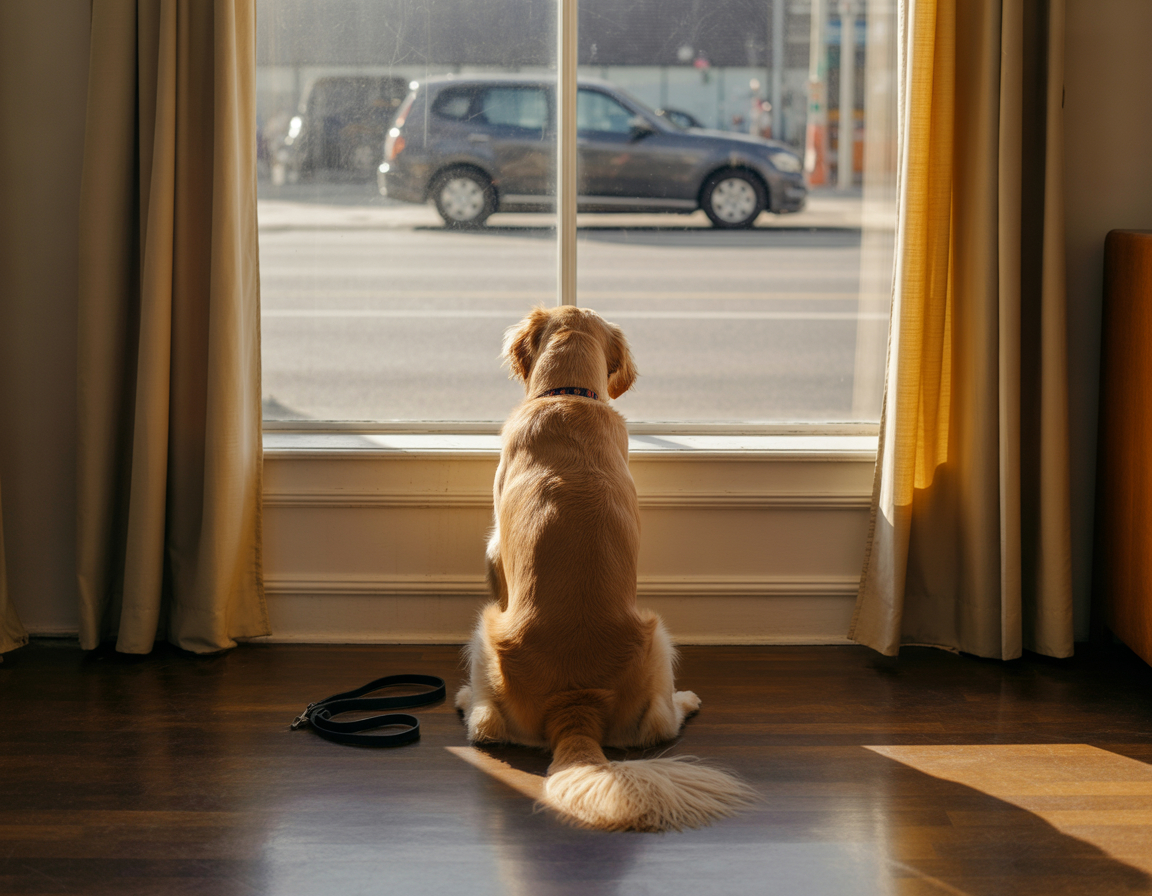
Many Golden Retrievers pace repetitively when anxious, wearing visible paths in your home. They may also exhibit shadowing behavior when you're home—following you from room to room, unable to settle unless they're touching you or in direct visual contact. This hyperattachment, while endearing to some owners, often predicts separation struggles and should be addressed through independence training.
Physical Symptoms
Golden Retrievers experiencing separation anxiety often show physical stress signs including excessive panting even in comfortable temperatures, drooling that soaks bedding or creates puddles, dilated pupils and "whale eye" (showing whites of eyes), trembling or shaking, and refusal to eat treats or meals when you're preparing to leave or after you've gone. Some Golden Retrievers also experience stress-related digestive issues, having diarrhea or vomiting associated with your departures.
One particularly concerning sign is self-directed behavior like excessive licking of paws or legs, sometimes creating hot spots or areas of hair loss. This self-soothing behavior, if chronic, requires both behavioral intervention and veterinary care for any resulting skin issues.
Escape Attempts
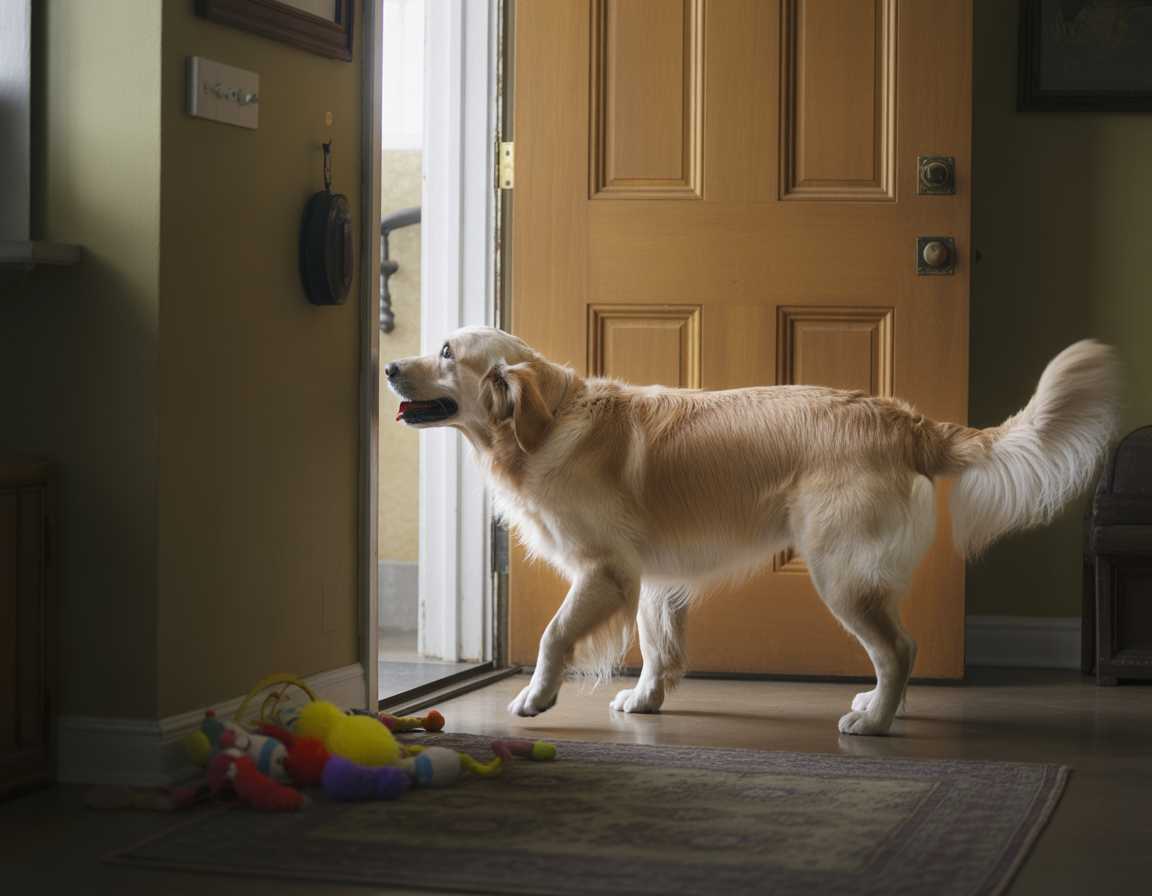
Golden Retrievers' size and strength mean their anxiety-driven escape attempts can be particularly destructive and dangerous. Anxious Golden Retrievers have been known to break through screen doors, jump through windows, dig under fences, or even chew through drywall near doors. These aren't calculated escape plans—they're panic responses where the dog is trying to reunite with their family or escape the overwhelming stress of being alone.
If your Golden Retriever is attempting to escape, this indicates severe distress requiring immediate professional help. Escape attempts can result in serious injuries—broken teeth, torn nails, lacerations, or worse. Never ignore or downplay escape behavior as it represents genuine panic and poses significant safety risks. For more information on managing severe separation distress, read our article on why dogs cry when you leave.
Training Solutions Tailored for Golden Retrievers
While general separation anxiety training principles apply to all breeds, Golden Retrievers benefit from approaches tailored to their specific temperament, intelligence, and needs. The following strategies leverage Golden Retrievers' strengths while addressing their vulnerabilities.
Leveraging Their Trainability
Golden Retrievers consistently rank among the most trainable dog breeds. They're eager to please, food motivated, and quick learners—advantages you can leverage in separation anxiety training. Use their responsiveness to positive reinforcement by heavily rewarding all calm, independent behavior. Set up training sessions specifically for practicing separation, with treats, praise, and calm attention as rewards for successful alone time.
Teach a "settle" or "place" command where your Golden goes to their bed and stays calmly. Practice this when you're home, gradually increasing duration and adding distractions. Once solid, use this command as part of your departure routine. A Golden who knows their job is to "settle" on their bed when you leave has something concrete to do rather than focusing on your absence.
Gradual Desensitization at Golden Retriever Pace
Because of their strong attachments, Golden Retrievers often need an especially gradual desensitization approach. Start with absences so brief they seem silly—literally 5-10 seconds where you step out of sight while your Golden is in their safe space. Return before any anxiety appears, reward calm behavior, and repeat multiple times daily.
Progress slowly—a Golden Retriever might need to spend several days or even a week at each duration level before advancing. This feels tediously slow but prevents the rehearsal of anxious behavior. Once anxiety is established, it's much harder to treat than it is to prevent through gradual training. Track your progress in a journal and celebrate small victories—30 seconds to 45 seconds is genuine progress worthy of recognition.
For Golden Retrievers showing any signs of distress at current durations, don't progress to longer separations. Instead, continue practicing at successful levels until your Golden consistently remains calm. Only when they're completely relaxed at a given duration should you increase by approximately 25-30%.
Exercise Before Alone Time
Golden Retrievers' high energy levels make pre-departure exercise essential, not optional. Aim for vigorous activity 60-90 minutes before you need to leave. This might include a long walk or jog, fetch sessions, swimming (many Golden Retrievers love water), or participation in dog sports like agility or nose work. The goal is genuine tiredness—your Golden should be ready to nap rather than pacing anxiously.
However, timing matters. Exercise immediately before departure can leave your Golden too excited and stimulated to settle. Allow 30-60 minutes after exercise for your dog to cool down, drink water, and transition from excited to calm-tired before you actually leave. This prevents the agitation that comes from trying to settle while still mentally and physically amped from activity.
Mental Enrichment and Problem-Solving
Golden Retrievers' intelligence means they need mental challenges to stay balanced and calm. Before alone time, provide mental enrichment through training sessions (practice basic obedience or teach new tricks), puzzle feeders where they work for breakfast, scent work or hide-and-seek with treats, or other problem-solving activities. Mental exercise tires dogs as effectively as physical exercise—15 minutes of training can equal a 30-minute walk in terms of creating satisfying fatigue.
During alone time, provide engaging activities. Kong toys stuffed with frozen treats (peanut butter, yogurt, wet food) provide 20-40 minutes of engagement. Puzzle feeders dispense kibble as your Golden manipulates them. Snuffle mats encourage natural foraging behaviors. Long-lasting chews like bully sticks occupy mouths and minds. Rotate these items so they remain novel and interesting rather than becoming boring through constant availability.
Counter-Conditioning for Emotional Response
Use Golden Retrievers' food motivation to change their emotional response to your departures. Create a special "departure treat" that appears exclusively when you leave—never at any other time. Frozen Kongs work excellently. Stuff a Kong with a mixture of kibble, peanut butter, mashed banana, or other safe foods, then freeze it. This creates a treat that takes 30+ minutes to finish.
Present this amazing treat 5-10 minutes before you leave so your Golden is happily engaged when you actually depart. Over time, they begin to associate your leaving with this wonderful experience. Their emotional response shifts from "Oh no, they're leaving" to "Oh great, I get my special Kong!" This positive association is powerful and particularly effective with food-motivated Golden Retrievers.
Managing Golden Retriever Anxiety: Day-to-Day Strategies
Beyond formal training, daily management strategies help reduce overall anxiety levels in Golden Retrievers and make alone time more manageable.
Building Independence When You're Home
Many Golden Retrievers develop hyperattachment, following their owners everywhere and becoming distressed when separated even within the house. Address this by actively building independence during your together time. Use baby gates to create separation while you're both home—you're in the kitchen, your Golden is in the living room with a chew toy. Initially this might trigger whining, but if your Golden's needs are met (recently exercised, bathroom break completed, water available), allow them to work through brief protest.
Encourage independent activities by providing engaging toys even when you're home. Don't allow constant physical contact—if your Golden must always be touching you when you sit, gently encourage them to settle on their nearby bed instead. Reward independent choices—if your Golden chooses to lie down across the room rather than on your feet, quietly praise and occasionally toss a treat. These small moments of independence when you're present build confidence for longer separations when you're absent.
Consistent Routines and Predictability
Golden Retrievers thrive on predictable routines. Establish consistent schedules for feeding, walks, play, and alone time. When departures happen at roughly the same time daily, your Golden knows what to expect and can anticipate that you always return. This predictability reduces anxiety compared to random, unpredictable absences.
However, avoid making your pre-departure routine too rigid or your Golden will develop anxiety around the specific cues. If you always pick up keys, put on shoes, and grab a coat in the same sequence, these actions become anxiety triggers. Instead, perform these actions randomly throughout the day sometimes without leaving. Pick up your keys and then sit down to work. Put on your coat and then make lunch. This desensitizes your Golden to these cues so they don't automatically predict separation.
Calm Departures and Returns
Golden Retrievers' emotional sensitivity makes your behavior around departures and returns particularly important. Dramatic, emotional goodbyes signal that leaving is a big deal, increasing anxiety. Similarly, over-the-top excited returns teach your Golden that reunions are extremely significant events, which by contrast makes your absence more distressing.
Practice calm, matter-of-fact departures. Give your departure treat, maybe a brief pat, and leave without fanfare. No extended goodbyes, no baby talk, no promises to "be right back." Just calmly go. When you return, ignore your Golden for the first 5-10 minutes even if they're wildly excited. Put away your things, take off your coat, settle in. Only once your Golden has calmed down should you provide calm, quiet attention. This teaches that comings and goings are normal, unremarkable parts of life.
Prevention Strategies for Golden Retriever Puppies
Prevention is infinitely easier than treating established separation anxiety. If you have a Golden Retriever puppy, implementing these strategies from day one can prevent anxiety from developing.
Independence Training from Day One
The day you bring your Golden Retriever puppy home, begin alone-time training. Even at 8 weeks old, practice very brief separations—30 seconds where you step out of sight while your puppy is in their safe space. Make this a daily practice, gradually increasing duration over weeks and months. Puppies who learn from the beginning that being alone is normal and safe become confident adult dogs.
Avoid the temptation to keep your adorable new puppy with you every moment. While bonding is important, constant togetherness during the critical early weeks can create overdependence. Balance bonding time with brief, positive alone experiences. This early foundation prevents anxiety much more effectively than trying to treat it in an adult dog who's never learned independence.
For detailed guidance on age-appropriate alone time for puppies, read our comprehensive article on whether you can leave a puppy home alone at different ages.
Socialization Beyond the Family
While Golden Retrievers naturally love people, ensuring broad socialization helps prevent over-attachment to only family members. During the critical socialization period (8-16 weeks), expose your puppy to various people—men, women, children, people of different ages and appearances. Allow friendly strangers to give treats and attention. This prevents your Golden from developing such exclusive attachment to family members that no one else can provide comfort.
Consider puppy daycare or regular play dates with other dogs. Golden Retrievers who enjoy the company of other dogs and various people develop more balanced social needs rather than depending solely on their primary owners. This broader social circle provides more emotional resources and reduces vulnerability to separation anxiety.
Crate Training Done Positively
When introduced correctly, crates provide Golden Retrievers with a secure den-like space that can reduce anxiety. Never force your puppy into a crate or use it as punishment. Instead, make it the best place in the house—feed all meals in the crate initially, provide special toys only available in the crate, and play crate games where you toss treats inside for your puppy to retrieve.
Practice crate time while you're home first. Once your puppy happily enters the crate, begin closing the door for brief periods with you sitting right next to it. Gradually increase duration and distance—door closed with you across the room, then in another room briefly, then leaving the house for short periods. This gradual process creates positive associations and prevents crate anxiety.
If your Golden Retriever puppy cries when you leave them in their crate, read our article on how to stop your puppy from crying when you leave for specific strategies.
When to Seek Professional Help for Golden Retriever Separation Anxiety
Sometimes despite best efforts, Golden Retrievers need professional intervention for separation anxiety. Knowing when to seek help can prevent minor issues from becoming severe behavioral problems.
Warning Signs Professional Help Is Needed
Consult a certified veterinary behaviorist or certified separation anxiety trainer if your Golden Retriever shows extreme panic responses including screaming, desperate escape attempts, or self-injury. If anxiety isn't improving despite 6-8 weeks of consistent training effort, professional guidance can identify what you might be missing. If anxiety is worsening over time rather than improving, or if destructive behavior is causing significant damage or safety concerns, don't wait—seek help promptly.
Additionally, if your Golden's anxiety is severely impacting your quality of life—preventing you from working, maintaining relationships, or living normally—professional help can provide more intensive interventions and support. For comprehensive information on helping dogs with separation anxiety, explore our guide on how to help dogs with separation anxiety.
Types of Professional Help Available
Several types of professionals can help with golden retriever anxiety. Certified Veterinary Behaviorists (DACVB) are veterinarians with specialized training in behavior who can prescribe medication if needed. Certified Professional Dog Trainers (CPDT-KA) with separation anxiety specialization offer structured training programs. Certified Applied Animal Behaviorists (CAAB or ACAAB) hold advanced degrees in animal behavior and work with complex cases.
Look for professionals who use positive reinforcement methods and have specific experience with separation anxiety. Avoid trainers who suggest punishment-based approaches or "dominance" theories, as these can worsen anxiety and damage your relationship with your Golden Retriever.
Medication as a Management Tool
For severe cases, anti-anxiety medication can be an important component of treatment. Medication doesn't "cure" separation anxiety, but it can reduce distress enough that behavior modification becomes possible. Common options include SSRIs like fluoxetine (Prozac) for long-term management, situational medications like trazodone for specific anxiety-inducing events, and natural supplements like L-theanine, melatonin, or CBD products where legal.
Medication works best when combined with behavior modification training, not as a standalone solution. Always work with a veterinarian who understands your Golden's complete health picture before starting any medication. Never give human anti-anxiety medications to your dog without veterinary approval, as some are dangerous for dogs.
Long-Term Management and Lifestyle Considerations
Successfully managing golden retriever separation anxiety often requires long-term commitment and lifestyle adjustments that accommodate your dog's needs while maintaining your quality of life.
Realistic Expectations for Alone Time
Even with successful training, Golden Retrievers typically shouldn't be left alone for 8+ hours regularly. While adult dogs can physically handle this duration, it's not ideal for a breed that thrives on interaction and activity. If you work full-time, consider solutions like dog walkers who provide midday visits, doggy daycare several days per week, or working from home when possible to break up your Golden's alone time.
Some Golden Retrievers, despite best efforts, never become completely comfortable with extended alone time. This isn't a failure—it's their individual temperament. For these dogs, lifestyle adjustments ensuring they're rarely alone for more than a few hours may be necessary. This might mean hiring pet sitters, arranging for family members to visit during the day, or considering whether your lifestyle is compatible with this particular Golden's needs. For age-appropriate alone time guidelines, see our article on how long dogs can be left alone.
Maintaining Skills Through Life Transitions
Life changes can trigger regression in previously confident Golden Retrievers. Moving to a new home, changes in household members (new baby, child leaving for college, divorce), schedule shifts (new job, retirement), or loss of another pet can all increase anxiety. During transitions, temporarily increase your management—shorter alone periods, more exercise and enrichment, and possibly consulting with your veterinarian about short-term medication support.
Even when your Golden handles separation well, continue practicing occasionally. Dogs who experience months of constant company (like during extended work-from-home periods) may struggle when routines suddenly change. Maintain skills through regular practice—brief separations here and there, even when not necessary, keep independence skills sharp.
Senior Golden Retriever Considerations
As Golden Retrievers age, new anxiety issues may emerge or existing ones may worsen. Cognitive dysfunction (similar to dementia in humans) can cause increased anxiety and confusion, particularly at night. Vision and hearing loss make being alone more frightening. Pain from arthritis or other age-related conditions can increase overall stress and anxiety.
Monitor senior Golden Retrievers closely for changes in anxiety levels. What worked for years may suddenly need adjustment. Senior dogs might benefit from closer sleeping proximity to owners, night lights to help with vision changes, more frequent potty breaks, and veterinary consultation about pain management or cognitive support supplements. For information on senior dog anxiety, read our article on senior dog separation anxiety.
Conclusion: Understanding and Supporting Your Golden Retriever
Golden retriever separation anxiety is a genuine challenge rooted in the breed's history, purpose, and temperament. Do Golden Retrievers have separation anxiety more than other breeds? Yes—their strong attachments, people-oriented nature, and need for interaction make them particularly vulnerable. However, understanding why your Golden struggles with alone time is the first step toward effective solutions.
The good news is that Golden Retrievers' intelligence, trainability, and desire to please make them excellent candidates for separation anxiety training when approached with patience and consistency. By leveraging their strengths—their food motivation, eagerness to learn, and responsiveness to positive reinforcement—you can help your Golden develop confidence and independence.
Remember that managing golden retriever anxiety is often a long-term commitment requiring ongoing attention to exercise, mental stimulation, training, and environmental management. Set realistic expectations based on your individual Golden's temperament rather than expecting perfection. Some Golden Retrievers will learn to handle 6-8 hours alone comfortably, while others will always do best with shorter durations and midday breaks. Neither outcome represents failure—it's simply understanding and accommodating your dog's individual needs.
Ready to help your Golden Retriever feel more secure? Start today with just five minutes of independence practice. While your Golden is engaged with a special treat, step out of sight briefly and return before any anxiety appears. These small, consistent steps build the foundation for a confident dog who can handle your absences with grace. With patience, consistency, and love for this wonderful breed, you can help your Golden Retriever thrive whether you're together or apart.
Key Takeaways
- Golden Retrievers are predisposed to separation anxiety due to breeding for close human partnership and people-oriented temperament
- They're overrepresented in separation anxiety cases compared to more independent breeds
- Signs specific to Golden Retrievers include destructive behavior targeting items with your scent and severe escape attempts
- Leverage their trainability and food motivation in separation anxiety training
- Require especially gradual desensitization due to strong attachments
- Pre-departure exercise (60-90 minutes) is essential, not optional
- Prevention through early independence training is far easier than treating established anxiety
- Seek professional help for severe cases—medication combined with training can be highly effective