Key Takeaways
- Dog reactivity is usually caused by fear, frustration, or over-excitement, not aggression
- Counter-conditioning can change your dog's emotional response to other dogs within 4-8 weeks
- Distance management is the most critical factor in successful training
- Small dogs and large dogs require different training approaches but the same underlying principles
- Consistent training in progressively challenging environments is key to long-term success
- Professional help should be sought if reactivity includes lunging, snapping, or aggressive displays
Understanding Why Dogs Bark at Other Dogs
Before you can effectively stop your dog from barking at other dogs, it's essential to understand what's driving the behavior. Contrary to popular belief, most dogs who bark at other dogs aren't being "dominant" or "aggressive" - they're communicating discomfort, excitement, or frustration.
The Three Main Types of Dog Reactivity
Fear-Based Reactivity: This is the most common type. Dogs bark because they're anxious or scared when encountering other dogs. The barking serves as a distance-increasing behavior - essentially saying "go away, you make me uncomfortable!" These dogs often have tense body language, tucked tails, whale eyes (showing the whites), and may try to hide behind their owner or retreat.
Frustration-Based Reactivity: Some dogs desperately want to greet other dogs but become frustrated when restrained by the leash. This "barrier frustration" manifests as barking, lunging, and spinning. Off-leash, these dogs might play appropriately, but on-leash they appear out of control. Their body language tends to be forward-leaning with high tail carriage and excited, not fearful, vocalizations.
Predatory or Territorial Reactivity: Less common but more serious, some dogs bark at other dogs due to predatory drive (especially toward small dogs) or territorial behavior. These dogs show intense focus, stillness before reacting, and may have a history of actual aggression. This type requires professional intervention.
Why Punishment Makes Reactivity Worse
Many owners instinctively yell "no!" or jerk the leash when their dog barks, but this actually reinforces the unwanted behavior. Here's why: If your dog is fear-reactive, punishment adds another negative association to the presence of other dogs. Now your dog is worried about both the other dog AND your reaction, increasing overall stress and making barking more likely.
If your dog is frustration-reactive, any attention (even negative) can inadvertently reward the behavior. Additionally, physical corrections create leash tension, which dogs associate with the presence of other dogs, making the problem worse.
The Foundation: Management and Distance
The single most important principle in stopping dog-reactive barking is managing distance. Every dog has a "threshold distance" - the point at which they can see another dog but remain calm enough to focus on you and take treats.
Finding Your Dog's Threshold Distance
Take your dog to a park or area where you can observe other dogs from various distances. Start far away - potentially 50-100 feet for very reactive dogs. Slowly walk closer while watching your dog's body language. The moment you see any signs of stress or fixation (stiffening, staring, ears forward, refusing treats), you've crossed the threshold. Back up until your dog relaxes again - that's your starting training distance.
For some dogs, this threshold might be 200 feet initially. That's okay - you'll gradually decrease it through training. For frustrated greeters, the threshold is usually much closer, perhaps 20-30 feet.
Management Strategies During Training
While you're working on training, prevent your dog from practicing reactive behavior:
- Route Planning: Walk during quiet times and on less-populated routes. Use apps like Sniffspot to rent private yards for exercise.
- Creating Distance: Cross the street, turn around, or step behind cars when you see other dogs approaching. There's no shame in avoiding triggers while building skills.
- Use of Visual Barriers: Train your dog to go behind you, sit in a down-stay behind a car, or focus on you while facing away from the trigger.
- The Emergency U-Turn: Teach a cue like "let's go!" that means immediately turn around and walk quickly in the opposite direction, heavily rewarding compliance.
Counter-Conditioning and Desensitization: The Gold Standard
This scientifically-proven method changes your dog's emotional response to other dogs, replacing anxiety or frustration with positive associations.
Week 1-2: Building the Foundation
Step 1 - The "Look at That" Game: At your dog's threshold distance from another dog, the moment your dog notices the other dog, mark it with "yes!" and deliver a high-value treat (real meat, cheese, not kibble). The sequence is: dog appears → your dog looks → you mark → you treat → other dog leaves or you create distance.
Repeat this 20-30 times over several sessions. You're teaching your dog that the appearance of other dogs predicts amazing treats. Initially, you're rewarding them for simply noticing, not for any particular behavior.
Step 2 - The Auto-Check: After consistent practice, your dog will start looking at other dogs and then immediately back at you, anticipating the treat. This "auto-check" is a huge milestone - your dog is choosing to disengage from the trigger and look to you for information. Jackpot this heavily with 5-10 treats in a row.
Week 3-4: Decreasing Distance
Once your dog is consistently auto-checking at the initial distance, decrease the distance by 5-10 feet. You may see a slight regression - that's normal. Work at this new distance until the auto-check is reliable again.
Progress markers to watch for:
- Your dog's tail relaxes and may even wag softly
- They take treats more readily (stress makes dogs refuse food)
- The auto-check happens faster
- They can hold the check-in longer before looking back at the other dog
Week 5-8: Adding Duration and Distractions
Now that your dog can notice other dogs and check in, add complexity:
- Walking Past: Practice having another dog walk parallel at your threshold distance, rewarding continuous check-ins
- Multiple Dogs: Gradually introduce scenarios with two dogs instead of one
- Different Environments: Practice in new locations - what works at the park may need re-training downtown
- Different Dog Types: Some dogs react more to specific breeds, sizes, or colors - address each variation
The Role of Alternative Behaviors
Alongside counter-conditioning, teach your dog specific behaviors to perform when they see other dogs:
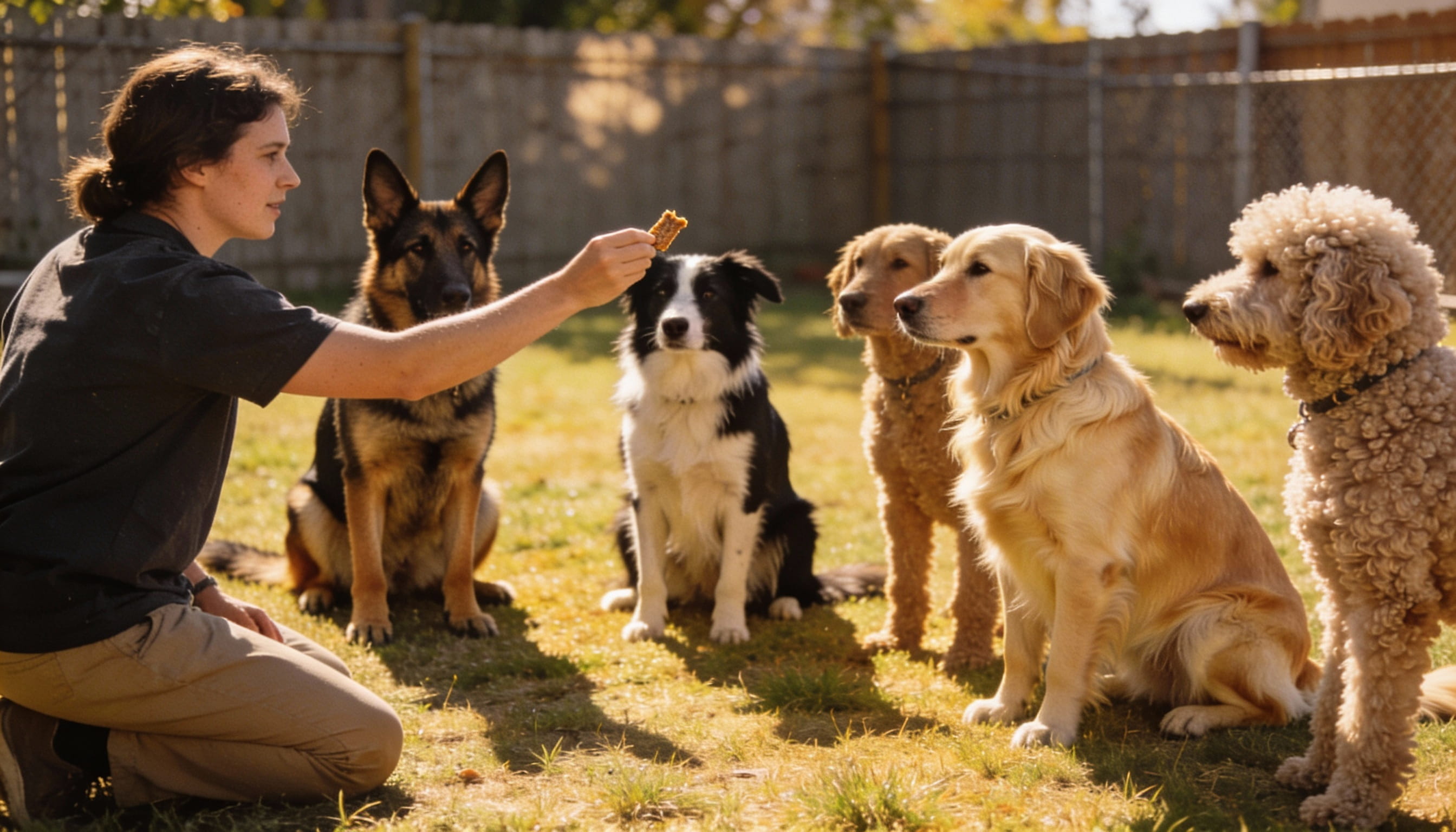
"Watch Me" Command: Train your dog to make eye contact on cue. Practice this at home with no distractions first, rewarding heavily for 2-3 seconds of eye contact. Gradually add distractions. On walks, cue "watch me" before your dog has a chance to react to approaching dogs.
"Touch" or Hand Target: Teach your dog to touch their nose to your palm. This gives them a specific job to do and physically orients them away from the trigger. It's especially useful for frustrated greeters as it provides an outlet for their energy.
"Find It" Scatter Feeding: When you see another dog approaching, scatter 10-15 treats on the ground and say "find it." This engages your dog's nose (calming) and keeps their head down (non-threatening body language) while the other dog passes.
Special Considerations for Small Dogs
Small dog reactivity is often dismissed as "small dog syndrome," but it's a legitimate fear response that deserves proper training. Small dogs face unique challenges that make reactivity more likely.
Why Small Dogs Are More Reactive
Small dogs experience the world differently - large dogs loom over them, and they're at higher risk of injury from inappropriate interactions. Many have also been inadvertently reinforced for reactivity when owners picked them up during barking episodes (which the dog interprets as reward/protection of their behavior).
Training Modifications for Small Breeds
- Never Pick Up During Reactions: This is the hardest rule for small dog owners but the most important. Picking up a barking dog reinforces the behavior and teaches them they can't handle the situation themselves.
- Parallel Walking: Small dogs benefit enormously from structured parallel walks with calm, dog-social dogs. Start 30+ feet apart and gradually decrease distance over weeks.
- Elevated Surfaces: Practice training on benches, low walls, or other elevated surfaces where your small dog feels less vulnerable and can see better.
- Size-Appropriate Playmates: Build positive associations through carefully supervised play with other small, gentle dogs rather than immediately expecting them to feel comfortable with large breeds.
- Confidence Building: Small dogs often benefit from learning tricks, agility, or other activities that build general confidence, which transfers to social situations.
Troubleshooting Common Challenges
"My Dog Won't Take Treats Around Other Dogs"
This means you're too close to the trigger - you've exceeded your dog's threshold. Move farther away until your dog will eat. If they won't eat at any distance, try higher-value treats (boiled chicken, hot dogs, freeze-dried liver) or consider that your dog might be too stressed for training that day. Some dogs are also too aroused/excited rather than fearful - for these dogs, try using their dinner kibble and feeding their entire meal during training walks.
"My Dog Is Fine Until the Other Dog Looks at Them"
Direct eye contact is threatening in dog language. Work specifically on this trigger by having a helper with a dog who will look away on cue. Reward your dog heavily when the other dog looks away, and practice at increased distances when the other dog makes eye contact.
"Training Works at the Park But Not on Our Street"
Dogs don't generalize well - what's learned in one environment must be re-taught in others. Your dog may also be more territorial near your home. Practice the same exercises on your street, potentially starting at your threshold distance from your own house and gradually working closer.
"My Dog Barks at Some Dogs But Not Others"
Dogs often react based on size, breed, color, sex, or specific body language cues. Identify the pattern and work specifically on those triggers. For example, if your dog only reacts to large black dogs, find a calm large black dog and a willing owner to help with controlled training sessions.
The Role of Exercise and Mental Stimulation
A tired dog is better able to handle stress and maintain impulse control. However, the type of exercise matters. Before training walks:
- Sniff Walks: 20-30 minutes of letting your dog sniff freely on a long line is incredibly calming for the nervous system
- Mental Work: 15 minutes of training, puzzle toys, or scent games tires the brain more than physical exercise
- Avoid Over-Arousal: Intense play at dog parks or high-energy fetch before a training walk can make reactivity worse due to elevated arousal levels
When to Seek Professional Help
While many cases of dog reactivity can be addressed with the techniques above, some situations require professional intervention:
- Your dog has made contact (bitten or attacked) another dog
- Reactivity is getting progressively worse despite training efforts
- Your dog is reactive in your own home or yard, not just on walks
- You feel unsafe handling your dog around triggers
- Your dog shows signs of redirected aggression (biting the leash or turning toward you when frustrated)
- Reactivity is severely limiting your quality of life and ability to exercise your dog
A certified professional dog trainer (CPDT-KA) or veterinary behaviorist can create a customized behavior modification plan and may recommend anti-anxiety medication to support training in severe cases.
Long-Term Management and Realistic Expectations
Some dogs will become completely non-reactive with training. Others will significantly improve but always need management in certain situations. Both outcomes are success stories if your dog's quality of life has improved.
Realistic timeline expectations:
- Weeks 1-4: Building foundation skills, identifying thresholds, seeing initial check-ins
- Weeks 4-8: Consistent auto-checks, able to decrease distance, can pass dogs at threshold
- Weeks 8-16: Generalizing to new environments, handling multiple dogs, increased reliability
- Months 4-6: Maintenance and fine-tuning, handling real-world scenarios more independently
Remember that progress isn't linear. You'll have setbacks, especially during adolescence (6-18 months), seasonal changes in behavior, or after stressful events. This doesn't mean your training has failed - simply return to basics temporarily.
Related Articles
Final Thoughts
Stopping your dog from barking at other dogs requires patience, consistency, and a commitment to positive reinforcement training. The goal isn't just to suppress the barking - it's to change how your dog feels about other dogs, creating genuine emotional comfort rather than mere compliance.
Every reactive dog can improve with proper training. Some will become social butterflies, while others will learn to peacefully coexist at a distance. Both are victories worth celebrating. The journey may be challenging, but the reward - peaceful walks and a more confident, happier dog - is absolutely worth the effort.
For more guidance on teaching overall calmness, see our comprehensive guide on how to get your dog to relax.